


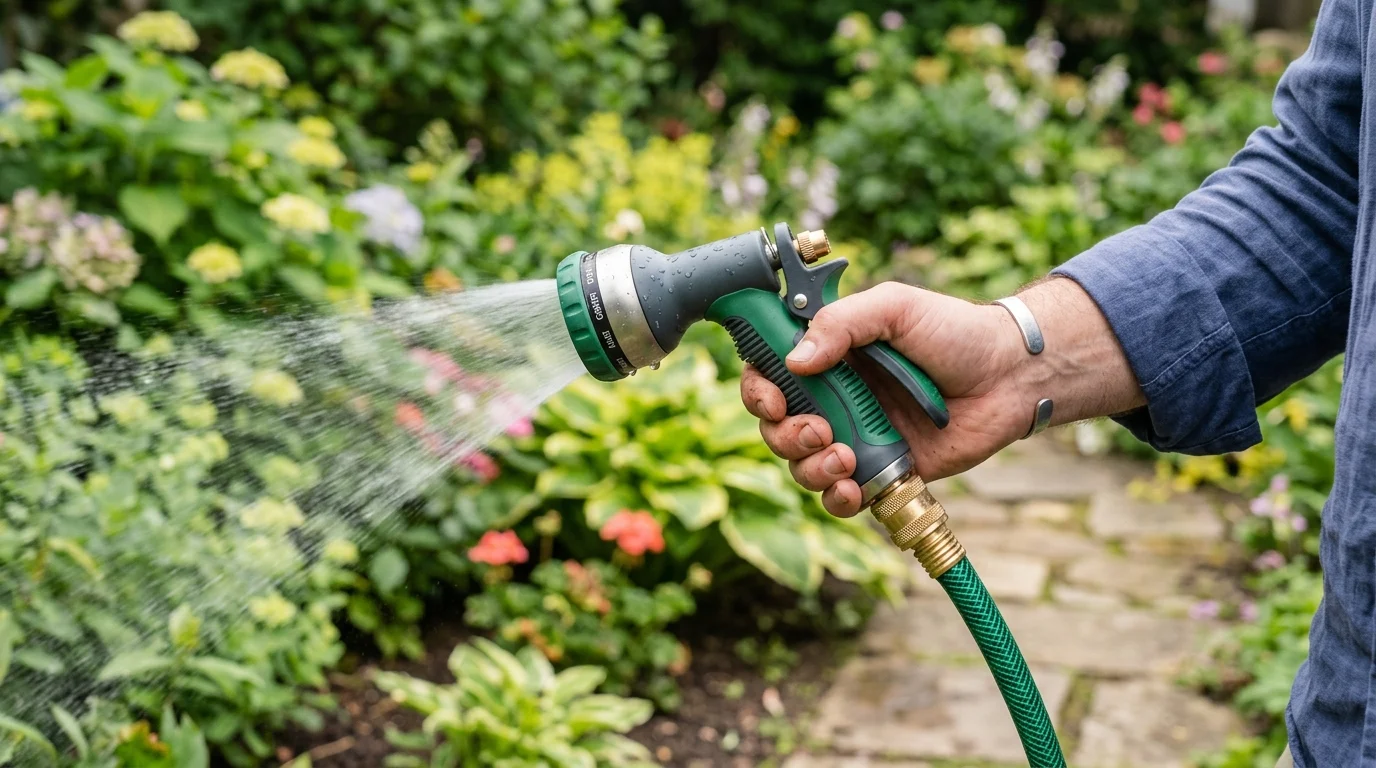
A garden Spray Gun may look like a simple hose attachment, but its spray patterns can determine whether users clean faster, water more precisely, and return to buy the same brand again. For retailers, distributors, and landscaping buyers, the difference between a basic nozzle and a well-designed multi-pattern model shows up in customer satisfaction, reduced returns, and stronger shelf value. This article breaks down the essential spray settings used in modern residential and commercial watering tools, explains how 8-pattern and 9-pattern designs compare, and highlights which functions matter most for cleaning, seedling care, shrub irrigation, walkway maintenance, and everyday garden performance.
How Garden Spray Guns Create Business Value
The global market for garden watering tools relies heavily on the versatility and durability of garden spray guns. For distributors, retailers, and landscaping professionals, stocking high-quality Hose Nozzles is no longer just about offering a basic watering accessory; it is about providing a multi-functional tool that meets diverse consumer and commercial demands.
Commercial landscapers and residential gardeners alike require adaptable water flow solutions to manage everything from delicate seedling hydration to aggressive equipment cleaning. Understanding how these tools create tangible business value—through improved retail margins, reduced return rates, and enhanced operational efficiency—is the first step in optimizing procurement strategies.
Why Buyers Should Evaluate Spray Patterns
Evaluating spray patterns is a critical step for wholesale buyers and procurement managers. Offering a versatile garden spray gun directly impacts end-user satisfaction and brand loyalty by ensuring the tool can handle a wide spectrum of daily tasks.
Retail industry estimates suggest that basic hose nozzles with limited functionality or poor pattern definition can experience return rates as high as 8%. In contrast, multi-pattern models with distinct, reliable settings often see return rates drop to roughly 2%. By understanding the specific applications of each spray setting, buyers can select inventory that aligns precisely with their target demographic's operational needs.
Which 9 Spray Patterns to Compare
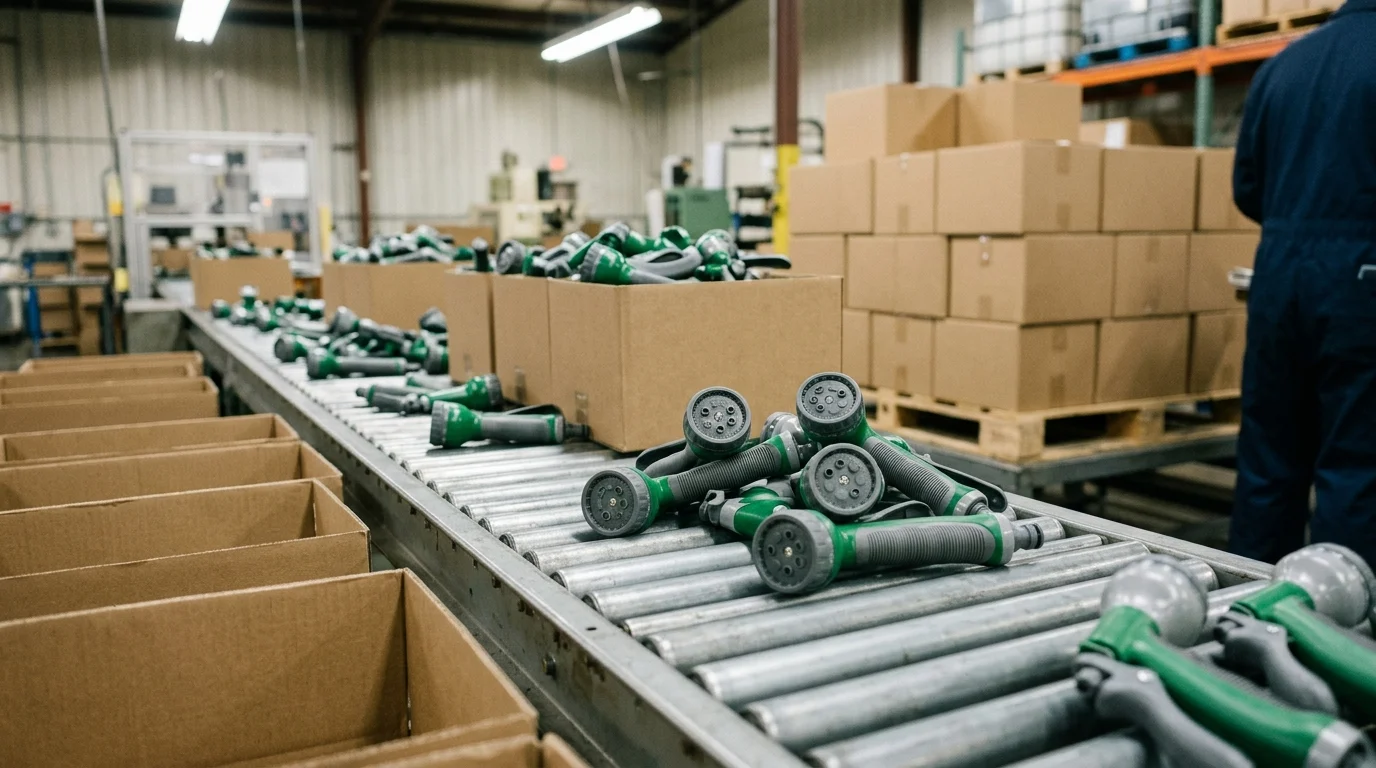
Modern heavy-duty hose nozzles utilize a rotary dial to switch between distinct water delivery modes. Understanding the fluid dynamics and intended application of each setting is essential for selecting a garden spray gun that performs reliably across various horticultural and cleaning environments.
Jet, Center, Flat, and Cone Patterns
The Jet, Center, Flat, and Cone patterns form the core functionality for direct watering and cleaning applications. The Jet setting restricts the aperture to deliver a concentrated, high-velocity stream that operates effectively at standard municipal water pressures of 40 to 60 PSI, making it ideal for dislodging mud from pavement or heavy machinery.
The Center pattern provides a robust but slightly aerated flow for targeted watering of established shrubs and tight flower beds. The Flat pattern creates a wide, horizontal sheet of water, perfect for sweeping debris off driveways and commercial walkways, while the Cone pattern disperses water in a circular gradient, offering a gentle touch for broad foliage coverage.
Shower, Mist, Soaker, and Full Patterns
For more nuanced hydration needs, the Shower, Mist, Soaker, Angle, and Full patterns are indispensable. The Shower setting simulates natural rainfall, delivering high volume without causing soil displacement or root damage.
The Mist pattern forces water through micro-apertures, generating microscopic droplet sizes. This ultra-fine dispersion is crucial for greenhouse environments and fragile seedlings. The Soaker setting bypasses the primary restriction plates to allow a low-velocity, high-volume flow of up to 3.0 gallons per minute (GPM) directly into the soil. The Angle pattern directs water downward for hanging baskets, and the Full pattern provides maximum unregulated flow for rapidly filling buckets or reservoirs.
What to Include in a Pattern Comparison Table
When evaluating different garden spray guns, procurement teams should utilize a standardized matrix to compare pattern efficacy. A comprehensive comparison table helps clarify which nozzle configurations align with specific landscaping or residential requirements.
| Spray Pattern | Optimal Application | Typical Flow Rate (GPM at 50 PSI) | Pressure Intensity |
|---|---|---|---|
| Jet | Hard surface cleaning | 1.8 - 2.2 | Very High |
| Center | Targeted shrub watering | 1.5 - 2.0 | Medium |
| Flat | Sweeping walkways | 1.5 - 2.0 | Medium |
| Cone | Broad foliage coverage | 1.5 - 2.0 | Low |
| Shower | General plant watering | 2.0 - 2.5 | Low |
| Mist | Seedlings & orchids | 0.5 - 0.8 | Very Low |
| Soaker | Deep root hydration | 2.5 - 3.0 | Minimal |
| Full | Rapid bucket filling | 3.0 - 4.0 | Low |
How Design Affects Spray Performance
The performance of a garden spray gun is heavily dictated by its internal architecture. Beyond the external aesthetics and ergonomic grips, the internal fluid dynamics determine how efficiently water is channeled from the hose connection to the nozzle exit.
Pressure Range, Nozzle Size, and Flow Path
A well-engineered garden spray gun must accommodate a wide pressure range, typically operating optimally between 40 and 90 PSI. Buyers must account for regional water pressure variability, ensuring the internal flow path is designed to minimize turbulence and pressure drop for consistent output across all patterns.
High-end models feature a streamlined core that aligns perfectly with standard 5/8-inch and 3/4-inch garden hoses. If the internal nozzle size is too restrictive, backpressure increases dramatically. This not only stresses the hose connections but also reduces the effective throw distance of the high-velocity Jet and Full patterns.
Key Specifications for Commercial Procurement
For commercial procurement, evaluating key specifications goes beyond simple feature lists. Buyers should mandate burst pressure ratings of at least 120 PSI to ensure safety and longevity under fluctuating municipal water pressures or commercial pump systems. Compatibility with universal quick-connect systems from various manufacturers is also a crucial specification to prevent end-user frustration.
Minimum Order Quantities (MOQs) for custom-branded OEM garden tools generally range from 1,000 to 5,000 units, depending on the required material composition. Furthermore, UV resistance ratings for any overmolded grips should be specified to prevent degradation in outdoor environments, and buyers should inquire about winterization requirements to ensure the internal components can withstand freezing temperatures if left outdoors.
Useful Metrics vs. Marketing Claims
Distinguishing between useful engineering metrics and exaggerated marketing claims is vital. Terms like "ultra-high pressure" are subjective, whereas a stated flow rate in GPM or a verifiable cycle-life rating offers tangible proof of manufacturing quality.
To illustrate the impact of material choice on long-term performance and procurement budgets, the following table contrasts common internal body constructions found in the industry. Note that lifespans are illustrative benchmarks and depend heavily on proper winterization and usage conditions.
| Core Material | Illustrative Lifespan (Years) | Corrosion Resistance | Relative Cost Index (1=Baseline) |
|---|---|---|---|
| Standard ABS Plastic | 1 - 2 | Excellent (Immune) | 1.0x |
| Aluminum Alloy | 2 - 4 | Moderate (Oxidation risk) | 1.8x |
| Zinc Alloy | 3 - 5 | Good (Requires coating) | 2.2x |
| Solid Brass | 5+ | Exceptional | 4.5x |
How the Selector Dial Prevents Leaks
The rotary selector dial is the defining feature of a multi-pattern garden spray gun, but it is also the most vulnerable component. Preventing leaks at this junction requires precise engineering, robust sealing materials, and exact manufacturing tolerances to maintain a watertight seal over time.
Internal Dial Structure
The internal structure of the dial relies on a detent mechanism, typically utilizing spring-loaded stainless steel ball bearings that click into designated grooves. This tactile feedback ensures that the user has perfectly aligned the internal fluid channels with the selected nozzle aperture.
If the dial is slightly off-center, water bypasses the intended channel, resulting in cross-spray or internal leakage. Premium designs incorporate a secondary inner faceplate that presses tightly against the rotating disc, using hydraulic pressure to actively maintain a watertight seal during pattern transitions.
O-Rings, Surface Finish, and Lubrication
Sealing integrity is predominantly maintained by high-quality O-rings and precise surface finishes. Commercial-grade garden spray guns utilize NBR (Nitrile Butadiene Rubber) or premium silicone O-rings, which resist degradation from prolonged UV exposure and waterborne chemicals.
The mating surfaces of the rotary dial must be machined to a strict flatness tolerance. Additionally, manufacturers apply FDA-approved, water-resistant silicone grease during assembly to reduce friction, ensuring the dial turns smoothly even after months of inactivity in a storage shed.
Common Failure Points
Despite robust designs, the dial mechanism remains a common failure point due to calcium buildup and mechanical wear. Hard water can deposit scale on the internal faceplates, acting as an abrasive that degrades the O-rings and plastic surfaces over time.
Laboratory lifecycle testing benchmarks suggest that premium models can endure thousands of dial rotations before displaying minor leaks at standard operating pressures. Conversely, economy models with inferior tolerances often experience seal failure much earlier, highlighting the importance of specifying rigorous durability standards during the sourcing process.
How to Choose the Right Garden Spray Gun
Selecting the optimal garden spray gun for retail distribution or commercial landscaping requires a strategic approach. Buyers must navigate a crowded market by aligning product specifications, cost structures, and durability metrics with the exact needs of their target end-users.
Define the Primary Use Case
The first step in procurement is defining the primary use case. Heavy-duty commercial landscaping demands ruggedized tools capable of surviving drops onto concrete and exposure to harsh elements. For this demographic, a solid brass or thick-walled metal garden spray gun with an oversized, ergonomic grip is mandatory.
In contrast, the lightweight residential gardening segment prioritizes ease of use and lower physical weight. A high-grade polymer model weighing under 200 grams is often preferable for casual home gardeners, a demographic where minimizing hand or wrist fatigue is a key selling point that buyers must consider.
Balance Cost, Materials, and Durability
Balancing cost, materials, and durability is the core of successful inventory management. A basic 8-pattern nozzle might carry an illustrative wholesale cost of $1.50 to $2.50, allowing for aggressive retail pricing and high volume turnover in big-box stores.
However, a premium metal model with an anodized finish and a brass quick-connect fitting may range from $4.50 to $6.00 wholesale. While the upfront investment is higher, the premium model drastically reduces warranty claims, elevates brand perception, and ultimately yields a higher lifetime value per customer in specialty hardware and nursery markets. Buyers should also carefully review warranty limitations offered by manufacturers to ensure they align with retail return policies.
Decision Framework for Buyers
A robust decision framework for buyers should incorporate supplier vetting, material validation, and logistical planning. Procurement managers should verify that OEM/ODM partners hold ISO 9001 certifications to guarantee consistent assembly quality, particularly regarding automated leak testing.
Factoring in production lead times is equally critical; custom-branded orders typically require 30 to 45 days for manufacturing, excluding international transit time. By systematically evaluating spray patterns, internal construction, and lifecycle metrics, businesses can confidently source garden spray guns that drive long-term profitability and ensure high customer satisfaction.
Key Takeaways
- Stocking multi-pattern garden spray guns helps retailers and distributors serve both residential gardeners and commercial landscapers with one versatile product category.
- Buyers should prioritize models with clearly defined spray settings because reliable multi-pattern nozzles can reduce return rates from about 8% to roughly 2%.
- An 8-pattern spray gun covers the essential watering and cleaning tasks, and add perceived value with minimal added wholesale cost.
- Use Jet for high-pressure cleaning at typical 40 to 60 PSI municipal water pressure, and use Mist or Shower for seedlings, flowers, and delicate foliage.
- Evaluate each spray pattern by application, including cleaning, targeted watering, broad coverage, soil soaking, and hard-to-reach irrigation, before making procurement decisions.
Frequently Asked Questions
What spray patterns are most important in a garden spray gun?
The core patterns are Jet, Center, Flat, Cone, Shower, Mist, Soaker, and Angle. Together, they cover high-pressure cleaning, targeted watering, broad foliage coverage, delicate seedlings, and slow soil soaking for residential and commercial use.
Which spray pattern is best for cleaning pavement or equipment?
The Jet pattern is best for tough cleaning because it produces a concentrated, high-velocity stream. It performs well at standard municipal water pressures of about 40 to 60 PSI and is useful for mud, debris, and hard surfaces.
Which spray pattern should be used for delicate plants?
Mist or Shower patterns are best for delicate plants. Mist provides fine, low-impact moisture for seedlings and fragile foliage, while Shower delivers a soft, rain-like flow for flower beds, vegetables, and general garden watering.
Why do spray patterns matter for retailers and distributors?
Clear, reliable spray patterns reduce customer dissatisfaction and product returns. Basic nozzles with poor functionality may see return rates near 8%, while dependable multi-pattern models can reduce returns to roughly 2%.