


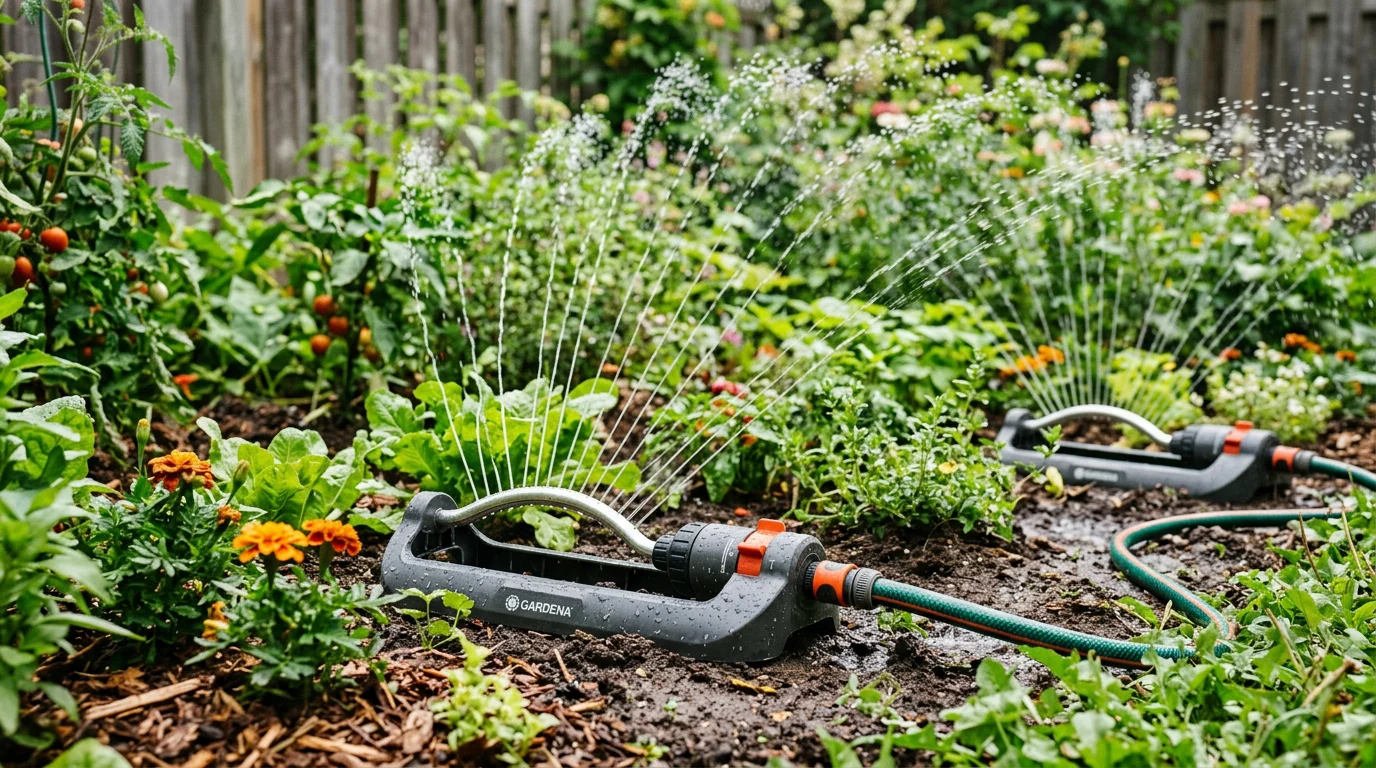
Water scarcity, tighter EU chemical rules, and tougher retail ESG requirements are reshaping how garden irrigation products are sourced across Europe. For distributors, choosing sustainable sprinklers is no longer only a branding decision; it affects compliance, contract eligibility, product lifespan, and customer trust. This article examines what makes a sprinkler genuinely lower impact, from water-saving spray performance and drought-ready coverage control to verified recycled materials and corrosion-resistant construction. It also highlights why REACH, RoHS, and credible third-party documentation matter when importing irrigation hardware into the European market, especially as regulators move toward stricter scrutiny of environmental claims.
Why Eco-Friendly Garden Sprinklers Matter
The European agricultural and landscaping sectors are undergoing a rapid transformation, driven by increasingly stringent environmental targets and unpredictable climate patterns. Transitioning product portfolios to prioritize sustainability is a fundamental market requirement for wholesale distributors and hardware retailers. Sourcing the right irrigation equipment—specifically stationary garden sprinklers—demands a careful evaluation of resource efficiency, material longevity, and regulatory compliance.
Navigating municipal water restrictions and consumer expectations is essential. Stocking certified hardware supports broader environmental goals and ensures supply chains remain resilient against regulatory shifts.
How to Define Eco-Friendly Sprinklers
Defining garden irrigation equipment as sustainable requires moving beyond surface-level greenwashing to examine quantifiable performance metrics. This is especially critical given the upcoming EU Green Claims Directive, expected in the coming years, which will require strict scientific substantiation for terms like "eco-friendly." A genuinely sustainable sprinkleris characterized by its operational efficiency, specifically its ability to maximize soil penetration while minimizing evaporative loss and runoff. High-efficiency models can achieve significant water conservation compared to legacy Impact Sprinklers when evaluated under controlled test conditions and standard pressure baselines (typically 2.0 to 4.0 bar), even as unified EU sprinkler-efficiency standards are still emerging.
Furthermore, the material lifecycle plays a critical role. Eco-conscious manufacturing prioritizes post-consumer recycled (PCR) plastics, UV-resistant polymers that prevent premature degradation, and highly recyclable metals like zinc alloy. However, PCR polymer claims require accredited third-party certification (such as EuCertPlast, the Global Recycled Standard (GRS), or the Recycled Claim Standard (RCS)) to verify environmental performance, as quality varies significantly between suppliers. Additionally, the long-term corrosion resistance of metal components depends heavily on coating quality, local water hardness, and seasonal storage conditions. Utilizing verified, durable materials extends the operational lifespan of the hardware, reducing replacement frequency and minimizing landfill waste.
Key European Market Drivers
The shift toward sustainable hardware is heavily influenced by recurring summer droughts across Southern and Central Europe, which have prompted strict municipal water usage limits. In response, there is a surging demand for drought-resistant sprinkler systems that utilize micro-spray technology or precise sector-control mechanisms to deliver water only where necessary. Consequently, the European smart and sustainable irrigation market is projected to expand steadily over the next five years.
Additionally, corporate ESG (Environmental, Social, and Governance) mandates are prompting large retail chains to audit their supply chains. Proactively offering verifiable, low-impact watering solutions positions suppliers to win lucrative contracts from major European home improvement centers and garden chains.
Compliance Requirements for Eco-Friendly Sprinklers
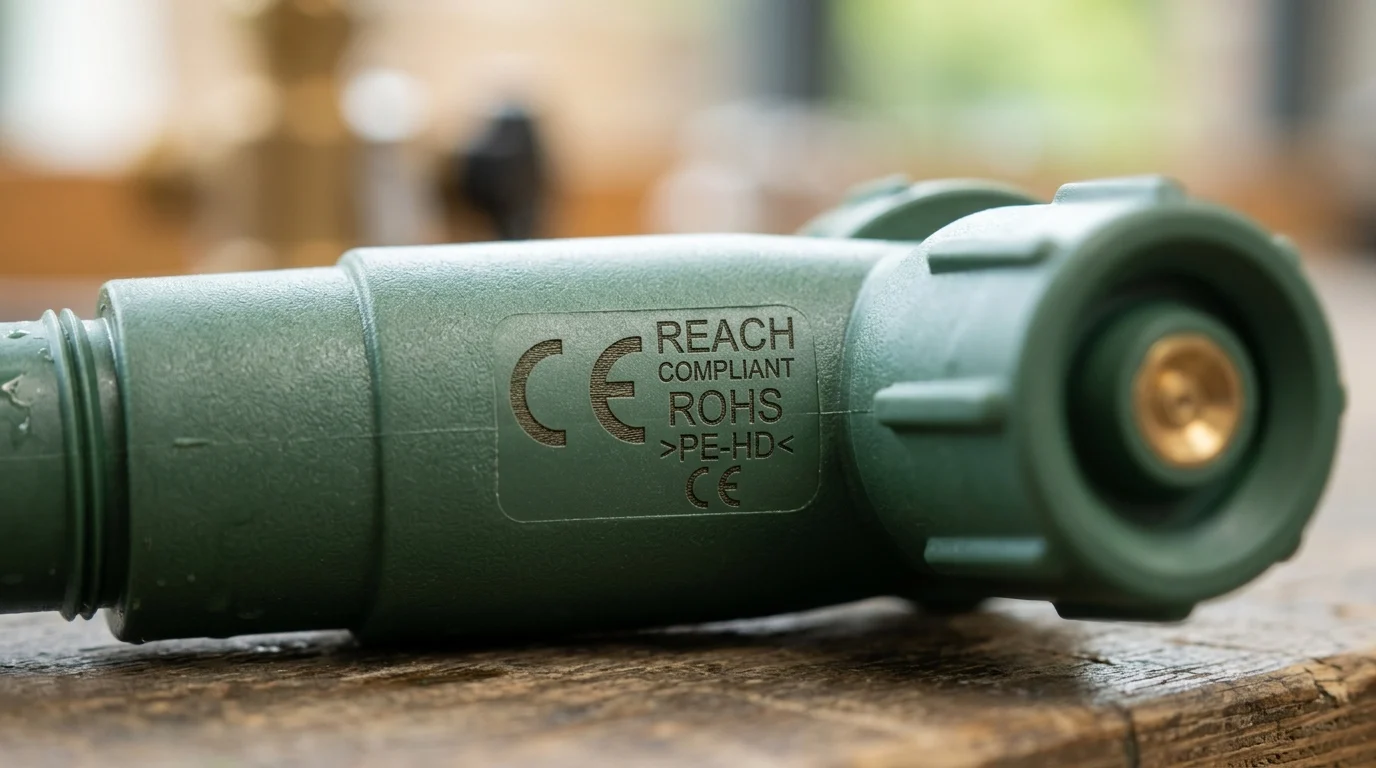
Importing hardware into the European Economic Area requires strict adherence to a web of consumer safety and environmental protection directives. Verifying these credentials before placing bulk orders is critical to avoiding customs seizures, legal penalties, and reputational damage.
The designation of "eco-friendly" must be supported by transparent supply chain documentation, proving that every component—from the internal O-rings to the external retail packaging—meets regional statutory thresholds.
REACH and RoHS Material Requirements
Chemical safety is a primary concern for any European garden sprinkler entering the market. The REACH regulation (Registration, Evaluation, Authorisation and Restriction of Chemicals) mandates strict communication and notification protocols if products contain Substances of Very High Concern (SVHCs) above a concentration limit of 0.1% by weight (1000 ppm). This is particularly relevant for the plasticizers used in rubber seals and the coatings applied to metal bases.
Additionally, while purely mechanical sprinklers generally fall outside its scope, if the sprinkler includes electronic timers or automated shut-off valves, it must comply with the RoHS (Restriction of Hazardous Substances) directive. RoHS strictly limits the presence of heavy metals, capping lead (Pb) at 1000 ppm and cadmium (Cd) at 100 ppm. Up-to-date third-party testing certificates should be requested from manufacturers to prove continuous compliance with these stringent chemical thresholds. Relevant hardware incorporating electronics must also carry mandatory CE marking to demonstrate conformity with applicable EU directives, such as the Electromagnetic Compatibility (EMC), Low Voltage (LVD), or Radio Equipment (RED) directives.
Eco-Friendly Packaging Checks
The sustainability of the product must extend to its presentation. The EU Packaging and Packaging Waste Directive (PPWD) places the burden of end-of-life disposal squarely on the importer and retailer. To mitigate Extended Producer Responsibility (EPR) fees, a transition away from single-use PVC clamshells toward FSC-certified cardboard and biodegradable kraft paper is underway across the industry.
Current industry benchmarks encourage retail packaging to be highly recyclable. Transitioning to FSC-certified or kraft packaging primarily helps distributors reduce EPR fees and supports strong eco-conscious brand positioning. While manufacturers utilizing soy-based inks and eliminating unnecessary plastic tie-downs ensure regulatory compliance and appeal to European consumers, these choices are about lifecycle responsibility and market positioning rather than directly reducing the total landed cost of the physical product.
How European Buyers Should Source Sprinklers
Procuring reliable irrigation equipment requires a strategic balance between robust technical specifications and adaptable supplier relationships. Evaluating the total value proposition—including product durability, regional compatibility, and OEM capabilities—is far more effective than focusing solely on unit costs.
A successful sourcing strategy involves partnering with manufacturers capable of scaling production without compromising on the environmental standards demanded by today's market.
Key Product Specifications
When evaluating product lines, thread compatibility and material grades are paramount. European markets predominantly utilize the BSP thread sprinkler standard (British Standard Pipe), with 1/2-inch and 3/4-inch connections acting as the dominant baseline for residential and commercial hoses. However, buyers must note that regional variants exist; conducting compatibility checks or sourcing adapters is necessary to prevent procurement mismatches. Ensuring precise thread molding across these connections prevents micro-leaks, a critical factor in water conservation.
| Material Type | Target Market | Expected Lifespan* | Recyclability | Typical Cost Band (Wholesale)** |
|---|---|---|---|---|
| Premium Zinc Alloy | High-end / Heavy-duty | 7-10 Years | Highly Recyclable | €4.50 - €8.00 / unit |
| High-Impact ABS Plastic | Economical / Everyday | 3-5 Years | Highly Recyclable*** | €1.20 - €3.50 / unit |
| Recycled PCR Polymer | Eco-conscious Retail | 3-5 Years | Highly Recyclable*** | €1.50 - €4.00 / unit |
**Expected
Key Takeaways
- Distributors should verify REACH and RoHS documentation before placing bulk orders to reduce customs, legal, and reputational risks.
- Eco-friendly sprinkler claims should be backed by measurable performance data, especially water efficiency under typical pressure ranges of 2.0 to 4.0 bar.
- PCR plastic claims should be supported by recognized certifications such as EuCertPlast, GRS, or RCS because recycled polymer quality varies by supplier.
- Sprinklers with micro-spray technology or sector-control functions help European retailers meet demand in drought-prone regions with water restrictions.
- Durable UV-resistant polymers and corrosion-resistant metals can extend product lifespan and reduce replacement frequency and landfill waste.
- Suppliers should prepare transparent sustainability documentation as the EU Green Claims Directive is expected to increase scrutiny of environmental marketing.
Frequently Asked Questions
What makes a garden sprinkler eco-friendly?
An eco-friendly sprinkler should reduce water waste through efficient spray patterns, controlled coverage, and minimal runoff. It should also use durable, recyclable, or verified recycled materials and have documentation supporting sustainability claims.
Why is REACH compliance important for European distributors?
REACH compliance helps confirm that sprinkler materials do not exceed restricted chemical thresholds in the EU. For distributors, it reduces the risk of customs delays, penalties, product recalls, and reputational damage.
Are recycled plastics always suitable for garden sprinklers?
Not always. PCR plastics vary in quality, durability, and UV resistance. Distributors should request third-party certifications such as EuCertPlast, GRS, or RCS to verify recycled content and material performance.
Which sprinkler features help reduce water consumption?
Micro-spray technology, sector control, stable pressure performance, and precise spray distribution help deliver water only where needed. These features are especially useful in areas affected by drought or municipal watering limits.
How should sustainability claims be verified?
Claims should be supported by test reports, material declarations, recycled-content certifications, and supplier documentation. This is increasingly important as EU rules on green claims become stricter.