


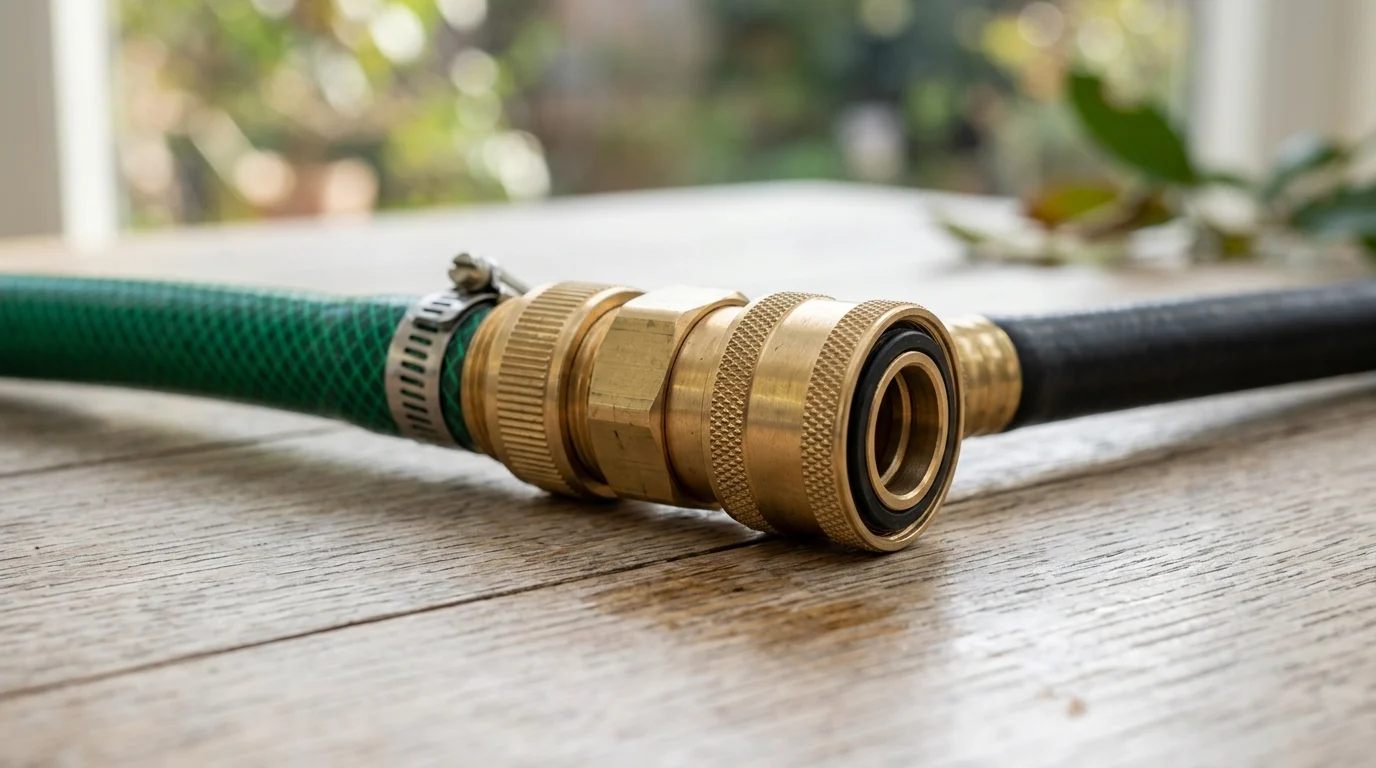
A leaking Hose Connector may look like a small defect, but at wholesale scale it can become a costly pattern of returns, chargebacks, and damaged retailer confidence. For buyers sourcing residential, agricultural, or commercial watering products, durability depends less on surface finish and more on the material chemistry, molding quality, seal performance, and resistance to UV, frost, pressure, and chlorinated water. This article examines the failure points that matter most in procurement decisions, from stripped threads and brittle O-rings to brass compliance and plastic aging. The goal is practical: help buyers compare specifications, qualify suppliers, and reduce leakage risk before inventory reaches the field.
Why Hose Connector Leaks Start with Material Quality
Hose connector leakage represents a significant liability for wholesale buyers, often driving seasonal return rates above acceptable industry thresholds if material specifications are compromised. The structural integrity of these hose connectors relies entirely on the underlying polymer or metal composition. Inferior materials yield to environmental stressors, initiating microscopic fissures that can propagate into catastrophic leaks under standard municipal water pressures. When a bulk shipment of agricultural or residential hose connectors fails in the field, the resulting chargebacks and logistical overhead can significantly erode quarterly profit margins. For distributors, understanding the root causes of these failures is essential for qualifying suppliers and mitigating the financial impact of defective inventory write-offs.
How UV, Cold, and Aging Damage Connectors
Ultraviolet radiation, freezing temperatures, and oxidative aging act as the primary catalysts for material degradation in a hose connector. Prolonged UV exposure breaks down the molecular bonds in standard thermoplastics, significantly reducing impact resistance over a single season unless tested to rigorous standards like ISO 4892. During sub-zero conditions, trapped water expansion exerts extreme internal forces, causing structural failure in rigid, non-pliable materials. Furthermore, continuous thermal cycling accelerates plasticizer migration, rendering rubberized grips and internal elastomeric seals brittle, ultimately leading to structural fatigue and weeping joints. In addition to thermal stress, continuous exposure to highly chlorinated municipal water accelerates the oxidative degradation of internal seals, compounding the effects of external weathering.
Key Failure Modes Wholesale Buyers Should Watch
Procurement specialists must evaluate several critical failure modes during supplier qualification to ensure product reliability. Thread stripping is highly prevalent in connectors molded from acetal (POM) or standard polypropylene (PP), particularly when repeatedly mated with coarse brass spigots exceeding standard hand-tightening torque limits of 15-20 in-lbs. Another primary failure point is the compression set of internal O-rings; elastomeric seals (such as EPDM or Nitrile) that exhibit excessive permanent deformation will fail to maintain a watertight boundary. Buyers should ensure compression-set values remain within strict industry limits for long-term sealing. Micro-cracking along the injection molding parting line indicates suboptimal cooling times or insufficient clamping force during manufacturing, a defect that manifests as pinhole leaks after minimal hydrostatic cycling. Additionally, buyers must account for installation-related failures—such as over-tightening, thread mismatch, and cross-threading by end users.
How to Compare Hose Connector Materials and Lifespan
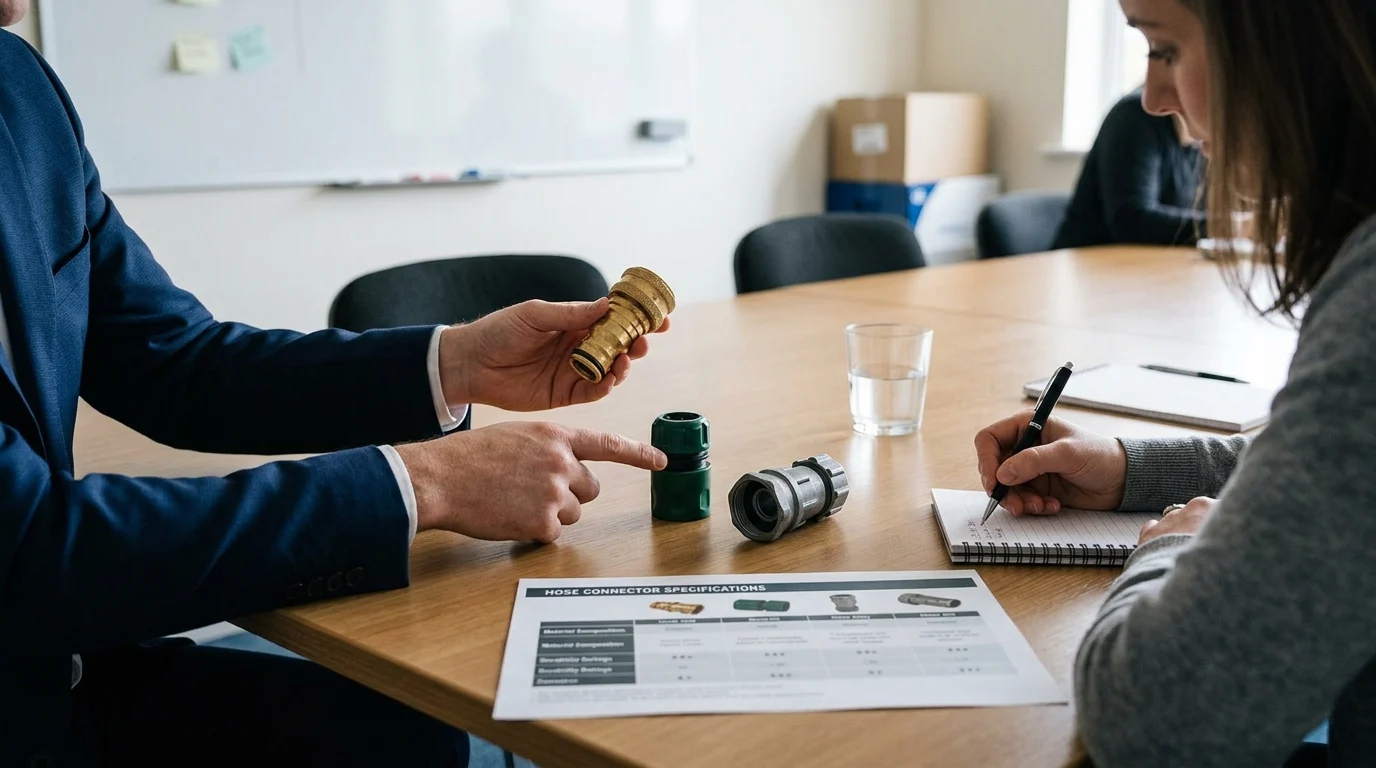
Evaluating hose connector longevity requires a rigorous analysis of tensile strength, fatigue resistance, and alloy composition. Wholesale buyers must transition from subjective quality assessments to standardized material data sheets to ensure component lifespans align with commercial warranties. A comprehensive matrix approach enables precise cost-to-durability forecasting across different product tiers, allowing distributors to build a resilient and profitable product portfolio.
What to Include in a Material Comparison
A robust material comparison must evaluate hydrostatic burst pressure, UV stabilization rating, and corrosion resistance. Brass components typically offer superior longevity but require strict scrutiny regarding lead content to maintain compliance with the NSF/ANSI 372 threshold of 0.25% maximum lead content. Crucially, lead-free status alone does not guarantee potable-water compliance for end users; drinking water system safety requires separate NSF/ANSI 61 certification.
Buyers must also be vigilant against widespread supply-chain substitution risks, where brass-plated zinc connectors are commonly misrepresented as solid brass. While zinc alloys are often used as a cost-driven alternative that mimics a premium aesthetic, they are highly susceptible to pitting and corrosion if the exterior plating is compromised, making genuine solid brass the superior choice for high-moisture commercial applications. Conversely, engineered plastics like Acrylonitrile Butadiene Styrene (ABS) and Polypropylene (PP) provide highly cost-effective alternatives, provided they feature adequate UV inhibitors.
| Material | Typical Burst Pressure | Max Operating Temp | Estimated Lifespan | Relative Cost (vs. PP) |
|---|---|---|---|---|
| Unstabilized PP | 100-120 PSI | Up to 40°C (104°F) | 1-2 Years | 100% (Baseline) |
| UV-Stabilized PP | 120-150 PSI | Up to 60°C (140°F) | 3-5 Years | 130% - 160% |
| Zinc Alloy | 150-200 PSI | Up to 75°C (167°F) | 4-6 Years | 250% - 300% |
| Solid Brass (CZ122) | 250+ PSI | Up to 90°C (194°F) | 10+ Years | 400%+ |
Note: The burst pressures, lifespans, and relative cost percentages above are illustrative industry estimates rather than universal specifications. Estimated lifespans assume material-specific failure modes, such as continuous UV degradation for plastics and general corrosion or pitting for metals. These estimates also assume proper installation and typical maintenance; end-user misuse or extreme local water chemistry can degrade even premium connectors faster than indicated.
Manufacturing Details That Improve Durability
Beyond base material selection, specific manufacturing parameters dictate the final durability of the hose connector. To improve quality-assurance traceability and factory audit evaluations, buyers should separate these into material-specific categories:
Plastic-Specific Manufacturing: Engineers must account for environmental stress cracking (ESC) and creep deformation under sustained loads, ensuring injection-molded units maintain an optimal minimum wall thickness at high-stress junctions to withstand repeated mechanical coupling. Additionally, multi-shot overmolding techniques that integrate thermoplastic elastomers (TPE) directly onto rigid substrates yield superior drop-impact resistance and structural adhesion compared to cheaper, adhesive-bonded grips, which often delaminate after a single season.
Metal-Specific Manufacturing: For metal connectors, CNC machining tolerances must be tight enough to prevent thread misalignment and subsequent galling during installation. Buyers must also evaluate metal-specific risks, such as brass dezincification in aggressive water conditions—such as soft, acidic, or high-chloride water—which necessitates the use of dezincification-resistant (DZR) alloys.
How to Choose the Right Hose Connector for Each Market
Aligning inventory with specific regional demands minimizes warranty claims and maximizes inventory turnover. A one-size-fits-all procurement strategy often leads to either margin erosion through over-engineering or brand damage via premature component failure. Distributors must meticulously analyze local climatic data, seasonal purchasing patterns, and target demographic usage rates to optimize their hose connector portfolios for distinct geographical markets.
When to Recommend Plastic Hose Connectors
High-grade Plastic Hose Connectors are the optimal recommendation for high-volume retail environments and temperate coastal regions.
Key Takeaways
- Require material data sheets and standardized test results before approving hose connector suppliers for bulk orders.
- Evaluate UV resistance, cold-weather performance, hydrostatic burst pressure, and corrosion resistance to predict field durability.
- Check brass connectors for compliance with the NSF/ANSI 372 maximum lead content threshold of 0.25% when potable water use is possible.
- Inspect plastic connectors for thread strength, parting-line micro-cracks, and molding consistency because these defects often become pinhole leaks after pressure cycling.
- Specify low compression-set O-rings, such as suitable EPDM or Nitrile grades, to maintain long-term sealing performance.
- Account for end-user issues like over-tightening, cross-threading, and thread mismatch when selecting connector designs and warranty terms.
Frequently Asked Questions
1. What causes hose connector leaks in bulk shipments?
Leaks often start with poor material quality, including weak polymers, low-grade metals, brittle seals, or molding defects. UV exposure, freezing, chlorinated water, and repeated tightening can turn small material weaknesses into thread failures, cracks, or weeping joints.
2. Which hose connector materials are most durable?
Brass generally offers strong durability and corrosion resistance, while engineered plastics can perform well if UV-stabilized and properly tested. Buyers should compare burst pressure, UV resistance, thread strength, and seal performance rather than relying only on appearance or unit price.
3. Why do plastic hose connectors crack in cold weather?
In freezing conditions, trapped water expands inside rigid connectors and creates high internal stress. If the plastic lacks flexibility or impact resistance, this pressure can cause cracking, especially around threads, parting lines, or other molded stress points.
4. What should wholesale buyers check before approving a supplier?
Request material data sheets, hydrostatic pressure results, UV aging tests, compression-set data for O-rings, and evidence of consistent molding quality. Buyers should also verify compliance requirements, such as lead limits for brass components used in potable water applications.
5. How do O-rings contribute to connector leakage?
O-rings fail when elastomers such as EPDM or Nitrile become brittle, deformed, or chemically degraded. Excessive compression set prevents the seal from rebounding, creating small leak paths even when the connector body remains intact.