


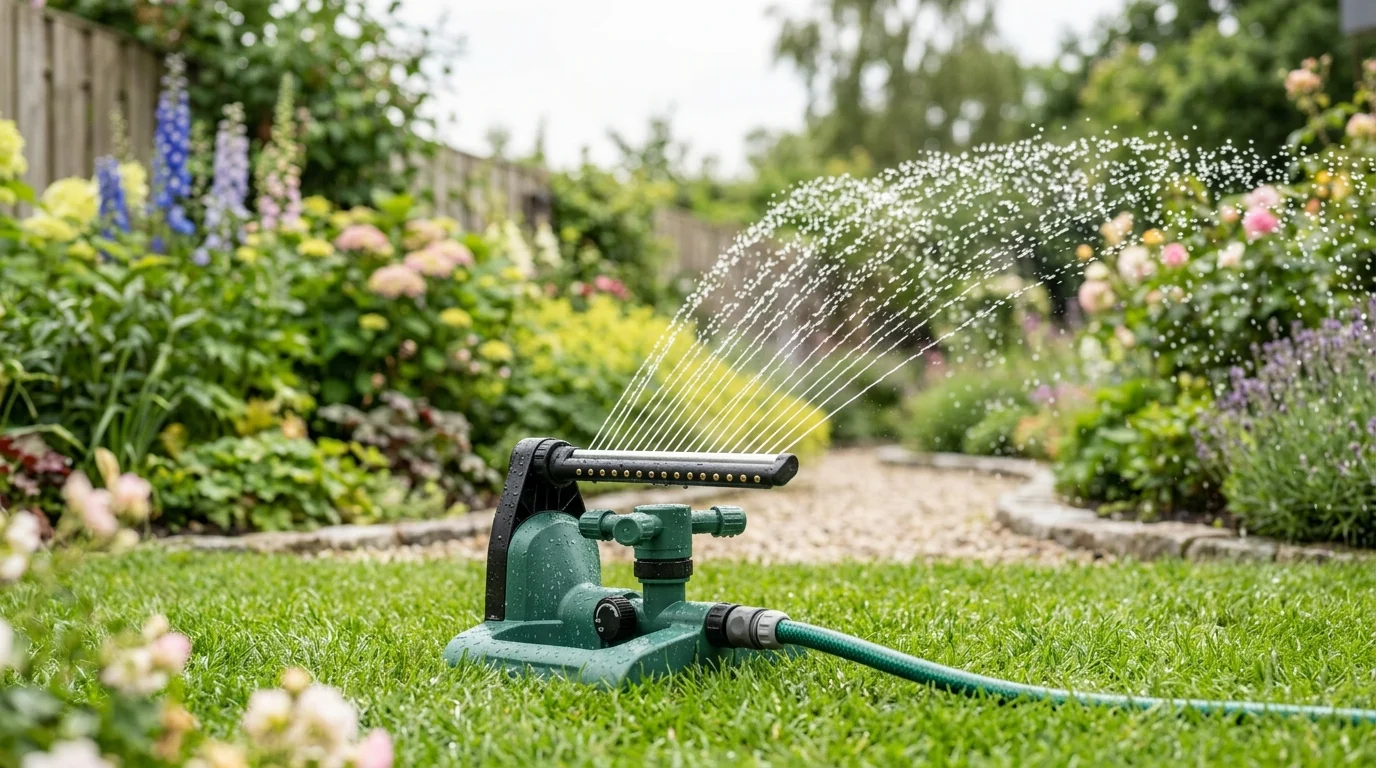
A healthy lawn depends on more than turning on the hose—it depends on applying the right amount of water, at the right rate, over the right area. The wrong sprinkler can waste a large share of irrigation through evaporation, wind drift, or runoff, while also stressing turf roots and encouraging disease. This guide compares oscillating, rotary, and Impact Sprinklers through practical buying factors such as lawn size, shape, water pressure, soil type, and coverage pattern. Whether you are watering a compact urban garden or maintaining a broad commercial lawn, understanding these differences helps you choose equipment that supports greener turf and smarter water use.
How to Choose the Right Garden Sprinkler
Selecting the optimal garden sprinkler is a critical decision that directly influences both landscaping aesthetics and water conservation efforts. Whether for a residential backyard or a commercial property, employing the wrong irrigation equipment wastes water and can harm your lawn.
Water waste can often reach high levels—sometimes estimated at up to 50%—due to evaporation, wind drift, and surface runoff when irrigation hardware is improperly matched to the terrain. Understanding the technical nuances of various sprinkler mechanisms is essential for maximizing both water efficiency and lawn health.
Why sprinkler choice affects turf health
The relationship between sprinkler output and soil infiltration rates affects overall lawn health. For example, heavy clay soils typically absorb water at a sluggish rate (often roughly 0.1 to 0.5 inches per hour). If a high-output sprinkler applies water faster than this threshold, the result is surface pooling, root rot, and the rapid proliferation of fungal diseases.
Conversely, sandy soils drain rapidly, requiring higher precipitation rates to ensure moisture adequately reaches the root zone before passing entirely through the subsoil. Matching the sprinkler's precipitation rate to the specific soil type prevents both drought stress and waterlogging.
Key buyer intents to address
Before buying a sprinkler, you must align your choice with your garden's specific size, shape, and soil type. Gardeners managing small, 500-square-foot urban plots prioritize precise boundaries to avoid watering sidewalks and driveways, demanding highly adjustable models.
Meanwhile, groundskeepers maintaining 5,000-square-foot commercial lawns require high-throw, even coverage that can operate unattended. Addressing these distinct requirements means finding a balance between broad coverage capabilities and strict water-efficiency standards.
Common mistakes to avoid
A frequent operational error in landscape management is mismatched water pressure. Operating a standard residential sprinkler at dynamic pressures exceeding 60 PSI can sometimes cause atomization or misting, where water droplets become so fine they evaporate or blow away before reaching the turf. Using pressure regulators or flow controls is a common solution to prevent this issue. Additionally, many users forget basic winterization; leaving water inside sprinklers during freezing temperatures can crack housings and ruin internal seals.
For those installing in-ground irrigation zones, another common mistake is mixing different sprinkler head types—such as rotors and fixed sprays—on a single valve. This severely degrades distribution uniformity and creates distinct dry and waterlogged patches. While this specific warning applies mainly to permanent systems rather than single portable Garden Sprinklers, the underlying principle of consistent water distribution remains vital for any landscape.
Main Garden Sprinkler Types Compared
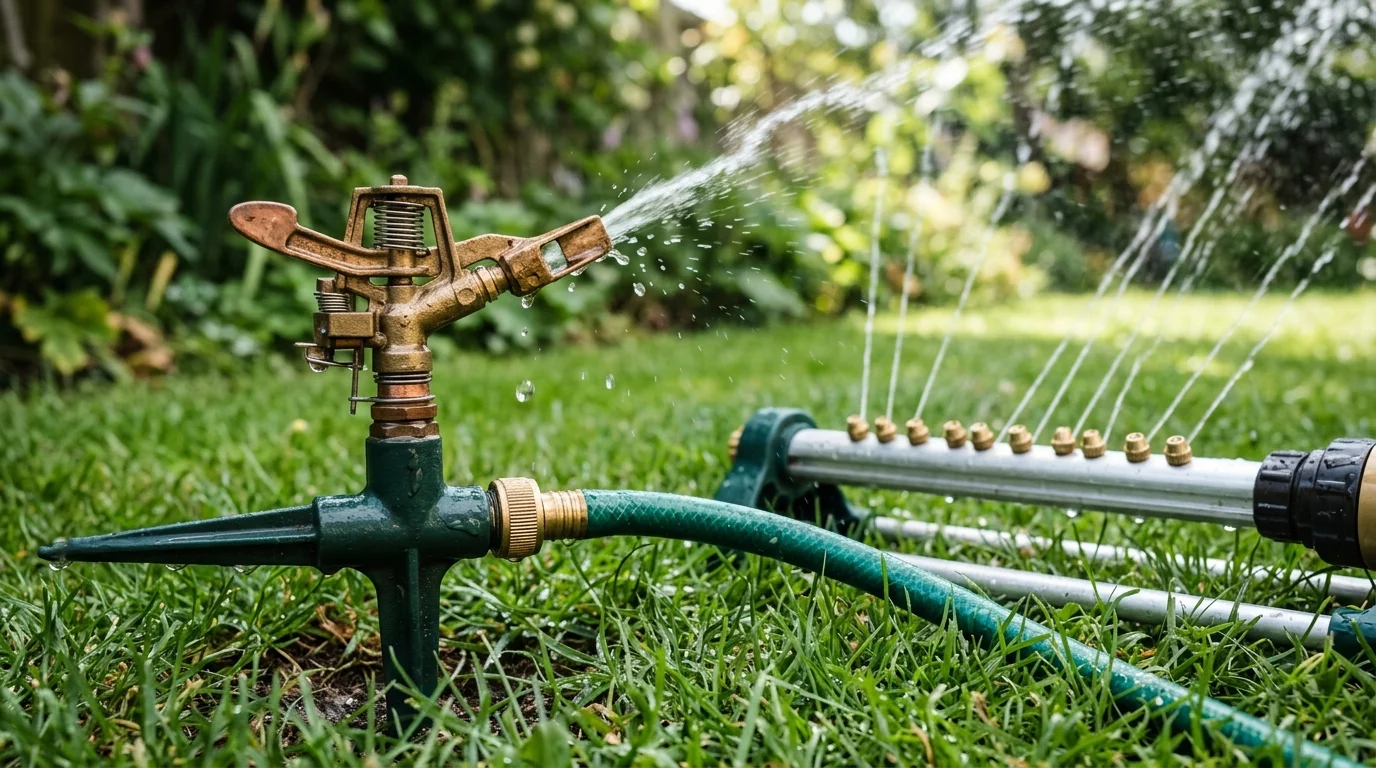
The irrigation market is segmented into several primary mechanical designs, each engineered to address specific spatial and environmental challenges. Understanding the mechanical distinctions between oscillating, rotary, and impact models is essential for effective landscape management and choosing the right product.
| Sprinkler Type | Typical Coverage (sq ft) | Optimal Pressure (PSI) | Best Application |
|---|---|---|---|
| Oscillating | 2,000 - 4,000 | 30 - 50 | Rectangular lawns, newly seeded turf |
| Rotary | 1,500 - 3,500 | 20 - 40 | Medium circular areas, established gardens |
| Impact | 5,000 - 10,000 | 40 - 65 | Large open spaces, agricultural plots |
Oscillating sprinklers
The traditional oscillating sprinkler operates via a horizontal tube equipped with multiple nozzles that sweeps continuously back and forth. This design is exceptionally well-suited for rectangular or square lawns, providing a gentle, rain-like shower that prevents soil displacement around delicate seedlings. To maintain this even coverage, routine nozzle cleaning is highly recommended, as hard water minerals can easily clog the fine output holes.
High-quality oscillating models feature adjustable internal cams to restrict the oscillation angle, allowing users to tailor the coverage area precisely. They typically require a moderate operating pressure to achieve their maximum throw distance without stopping the water-driven turbine mechanism that powers the oscillation.
Rotary sprinklers
A rotary sprinkler functions by spinning multiple arms or utilizing a gear-driven internal mechanism to distribute water in a 360-degree circular pattern. These units typically boast lower precipitation rates, which allows dense or compacted soil ample time to absorb the moisture.
Rotary units are highly efficient in medium-sized, irregularly shaped gardens. A significant advantage of multi-arm rotary designs is their ability to operate reliably even at lower municipal water pressures, often performing optimally without requiring heavy-duty flow rates.
Impact sprinklers
Known for their distinct clicking sound—which can sometimes be a noise disturbance in dense residential neighborhoods—impact sprinklers use the force of outgoing water to pivot a spring-loaded arm. This arm repeatedly strikes the sprinkler body to rotate the nozzle. This robust, open-flow mechanism is highly resistant to clogging, making it ideal for well water or supplies with high mineral and particulate content.
Capable of throwing water over 50 feet in a single direction, impact models can cover expansive areas up to 10,000 square feet. However, they require robust dynamic pressure to maintain their rotational momentum and prevent the arm from stalling.
Garden Sprinkler Specifications to Compare
Beyond the core mechanism, the technical specifications of a sprinkler dictate its operating range, longevity, and compatibility with existing irrigation infrastructure. Evaluating these metrics ensures that the hardware performs reliably under continuous seasonal use and variable environmental conditions.
Coverage area and spray pattern
Coverage specifications are primarily defined by radius, throw distance, and pattern adjustability. While entry-level models may offer a fixed 360-degree spray, advanced units allow for sector adjustments ranging from a narrow 40-degree wedge to a full continuous circle.
The throw distance, directly correlated with nozzle geometry and dynamic pressure, can range from a modest 15 feet for localized watering to over 60 feet for commercial-grade agricultural emitters. Precise adjustability minimizes overspray onto hardscapes, conserving significant volumes of water.
Water pressure and flow rate
Flow rate, measured in Gallons Per Minute (GPM), and dynamic water pressure are the engines driving any irrigation system. A standard 5/8-inch residential garden hose typically delivers between 10 and 14 GPM at a baseline pressure of 50 PSI.
If a sprinkler's nozzle aperture demands a higher flow rate than the source can provide, the throw distance will collapse entirely. This leads to severe under-watering at the perimeter of the intended coverage zone and excessive pooling near the sprinkler base.
Durability, materials, and adjustability
Materials directly affect a sprinkler's durability and lifespan, particularly concerning UV degradation, burst pressure, and impact resistance. High-grade ABS plastics can typically withstand prolonged UV exposure and resist cracking during freeze-thaw cycles, depending on the manufacturer, while metal components resist cross-threading.
Buyers can choose between durable zinc alloy for heavy-duty applications and lightweight plastic for economical, everyday watering. Quality sprinklers often feature adjustable settings for spray distance, arc pattern, and diffuser mechanisms to easily handle various scenarios from targeted watering to broad lawn coverage.
Best Sprinkler Options by Watering Need
Selecting the most appropriate irrigation hardware requires aligning the sprinkler's precipitation characteristics with the specific botanical requirements of the landscape. Standard turf grass, deep-rooted shrubs, and fragile vegetable seedlings all demand vastly different watering strategies to achieve optimal growth.
Lawns, flower beds, and vegetable gardens
Turf grasses generally require 1 to 1.5 inches of water per week, best delivered in deep, infrequent sessions using high-throw rotors or impact drives to encourage deep root growth and drought resilience.
Flower beds, however, are easily damaged by high-velocity water streams; they benefit from low-angle rotary units that apply water close to the soil surface without striking delicate petals. Vegetable gardens often thrive under the gentle, uniform precipitation of an oscillating unit, which mimics natural rainfall without eroding valuable topsoil.
Fixed spike-base vs movable sprinklers
The base design of a sprinkler significantly impacts its utility and placement stability. Fixed spike-base models offer excellent stability and are designed to penetrate 6 to 8 inches into loamy or sandy soils, preventing the unit from tipping backward under high-pressure surges.
However, in hard-packed clay soils or scenarios requiring frequent repositioning across a large estate, sled or wheeled bases are vastly superior. They provide a wide center of gravity and allow operators to drag the sprinkler by the hose without uprooting the turf or damaging the equipment.
When to choose micro-spray or drip irrigation
While broadcast sprinklers are excellent for extensive coverage, micro-spray and drip irrigation systems are mandated for high-efficiency targeted watering. Operating at remarkably low pressures (typically 15 to 25 PSI), these systems deliver water directly to the root zone.
By eliminating wind drift and minimizing surface evaporation, micro-irrigation achieves application efficiencies that can reach up to 90% in ideal conditions. They are the preferred choice for dense shrubbery, container gardens, and regions enforcing strict municipal drought restrictions where broadcast evaporation losses are legally or economically unacceptable.
B2B Garden Sprinkler Sourcing Considerations
While homeowners focus on individual lawn needs, hardware retailers, wholesale distributors, and commercial buyers must approach sourcing irrigation equipment by balancing unit costs, supply chain reliability, and market demand. Strategic procurement requires rigorous evaluation of manufacturing partners and a clear understanding of product segmentation to serve the end consumer effectively.
Procurement factors for retailers
Retail procurement teams must carefully evaluate manufacturing standards, production lead times, and quality control metrics. Typical industry lead times for bulk irrigation equipment often range from 30 to 45 days, depending on the supplier, requiring accurate seasonal forecasting to prevent stockouts during peak spring demand.
Furthermore, rigorous quality limits should be enforced during manufacturing. Top-tier retail buyers generally aim for a defect rate below 1.5% to minimize costly consumer returns, reduce return shipping costs, and protect the store's reputation.
Brand positioning and product differentiation
Effective inventory strategy relies on clear product differentiation across various price points. Entry-level models, often constructed from UV-stabilized polypropylene and packaged in high-visibility blister packs, drive volume and capture impulse purchases.
Conversely, professional-grade models featuring brass or zinc components, backed by multi-year warranties and replacement nozzle kits, cater to landscaping contractors and earn higher margins. Retailers must segment their inventory intelligently to capture both the budget-conscious homeowner and the professional demographic.
Final decision matrix
To streamline the procurement process, buyers should utilize a structured evaluation matrix that aligns material quality with target margins and retail positioning.
| Product Tier | Core Materials | Target B2B Margin | Suggested Retail Positioning |
|---|---|---|---|
| Economy | ABS Plastic, Polypropylene | 35% - 45% | $10 - $20 (High volume, residential) |
| Mid-Range | Aluminum, High-Impact Polymer | 40% - 50% | $25 - $40 (Prosumer, large lawns) |
| Professional | Brass, Zinc Alloy, Stainless Steel | 50%+ | $45 - $80+ (Commercial, heavy-duty) |
By leveraging this matrix and understanding the technical nuances of each sprinkler type, distributors can optimize their purchasing cycles. For the everyday consumer, however, the final decision ultimately comes down to matching the sprinkler to your lawn's shape, your soil type, and your home's water pressure to ensure a healthy, vibrant garden.
Key Takeaways
- Match sprinkler output to soil infiltration because clay may absorb only about 0.1 to 0.5 inches per hour, making high-output watering prone to runoff.
- Use Oscillating Sprinklers for rectangular lawns and precise boundaries, especially when watering near sidewalks, driveways, or newly seeded turf.
- Choose higher-throw rotary or impact sprinklers for larger areas, such as lawns closer to 5,000 square feet, where broad unattended coverage matters.
- Keep standard residential sprinkler pressure below about 60 PSI or use a regulator to reduce misting, evaporation, and wind drift.
- Avoid mixing sprinkler head types on one in-ground irrigation zone because uneven precipitation rates can create dry spots and waterlogged patches.
- Winterize sprinklers before freezing weather by draining trapped water to prevent cracked housings and damaged internal seals.
Frequently Asked Questions
Which sprinkler type is best for a rectangular lawn?
An oscillating sprinkler is usually best for rectangular lawns because its spray pattern can be adjusted to match straight edges and reduce watering on paths, patios, or driveways.
When should I choose a rotary sprinkler?
Choose a rotary sprinkler for medium to large lawns that need even circular or part-circle coverage. It is useful when you want steady distribution across wider areas without the sharp rectangular pattern of an oscillating model.
Are impact sprinklers good for large lawns?
Yes. Impact sprinklers are commonly used for larger lawns and tougher outdoor conditions because they can throw water farther and are often more durable, especially where broad coverage is more important than very precise edges.
Why does soil type matter when choosing a garden sprinkler?
Soil controls how quickly water can soak in. Clay soils absorb slowly, while sandy soils drain quickly. Matching sprinkler output to soil type helps prevent runoff, pooling, drought stress, and fungal problems.
What water pressure is too high for a residential sprinkler?
Pressures above about 60 PSI can cause misting or atomization in many residential sprinklers, increasing evaporation and wind drift. A pressure regulator or flow control can help maintain efficient watering.