


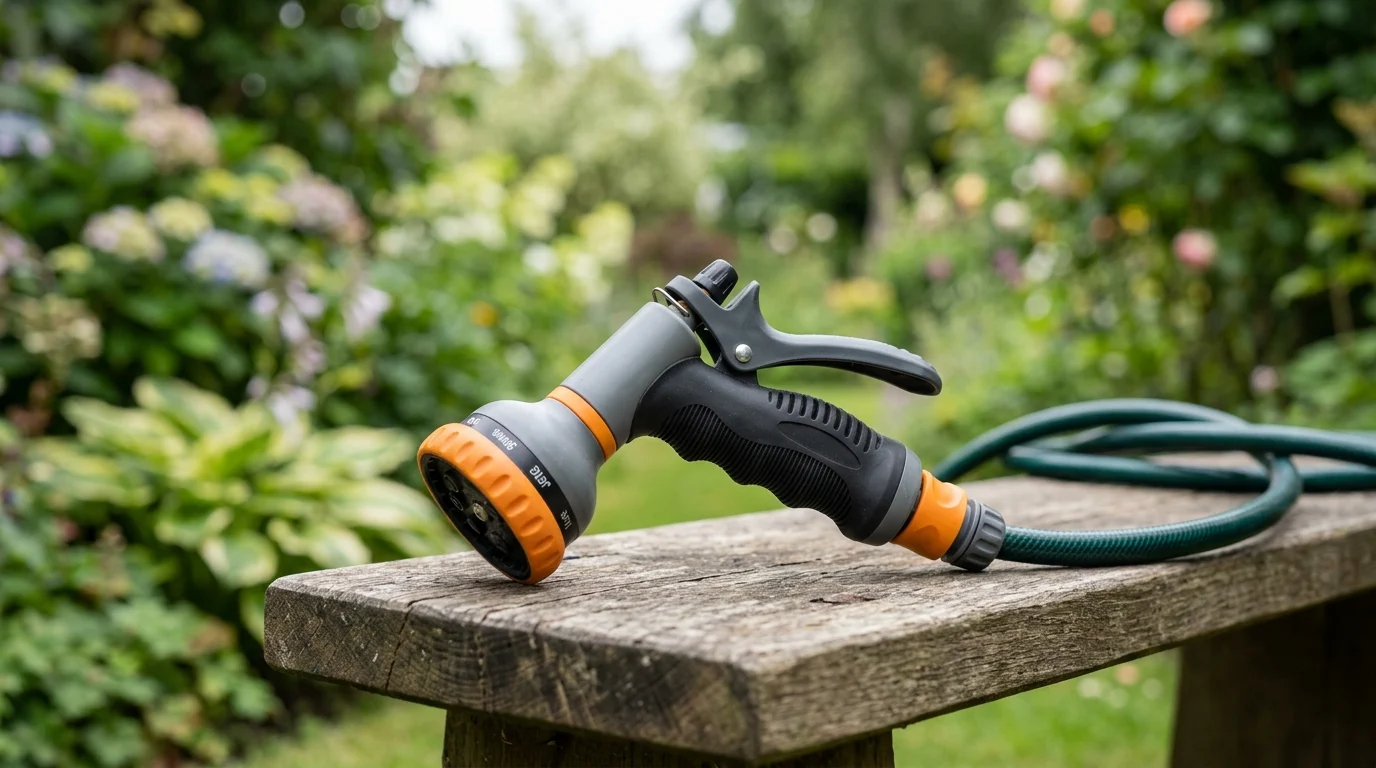
A garden Spray Gun may look simple, but its grip has to perform under conditions that quickly expose weak design: mud, cold rain, stiff gloves, high flow, and line pressure that can exceed 120 PSI. In these environments, a slippery hard-plastic handle is more than inconvenient; it increases fatigue and reduces control. This article explains howTPR overmolded gripsare engineered to stay secure and comfortable when temperatures drop below freezing and surfaces become contaminated. We’ll look at the ABS structural core, two-shot molding, friction targets, cold-weather flexibility, and the design trade-offs that help a Garden Hose Nozzle remain reliable through demanding outdoor use.
How TPR Grip Spray Guns Perform in Garden Use
Heavy-duty watering tasks demand reliable equipment, particularly when operating a TPR grip spray gun for garden applications in adverse weather. Outdoor environments frequently expose hand tools to water, soil, and fluctuating temperatures. To maintain control and reduce user fatigue, we engineer these watering nozzles using an advanced dual-material construction. When ambient temperatures drop below 0°C, or when managing continuous flow rates reaching up to 5 gallons per minute at line pressures exceeding 120 PSI, a standard hard-plastic nozzle becomes increasingly difficult to handle.
Joint stiffness in cold weather exacerbates the physical strain of gripping a rigid tool. By integrating specialized thermoplastic elastomers (TPR) into our designs, we mitigate this strain, ensuring the garden hose spray nozzle remains secure in the user's hand regardless of environmental contaminants. While TPR offers exceptional grip, we carefully balance material formulations to manage cost trade-offs and prevent long-term ozone degradation, ensuring a durable final product.
ABS Substrate and TPR Overmold Benefits
The foundation of a high-quality, heavy-duty garden hose nozzle lies in its internal framework. In our manufacturing process, we typically utilize an Acrylonitrile Butadiene Styrene (ABS) substrate engineered with a target wall thickness of 2.5mm to 3.0mm. This rigid core provides the necessary tensile strength and impact resistance to withstand high internal water pressure and accidental impacts on hard surfaces.
Over this durable core, we apply a TPR layer via a precision two-shot injection molding process. This overmolding technique creates a seamless chemical bond between the ABS and TPR, achieving a peel strength that typically exceeds 50 N/mm in our internal testing. This structural synergy ensures the tool remains robust while offering a comfortable, resilient exterior that resists delamination even under heavy torsion.
Grip Performance in Mud, Water, Gloves, and Cold
Environmental contaminants like wet soil and freezing rain drastically alter the friction dynamics between a user's hand and the watering tool. We utilize TPR materials because they excel in these conditions due to their unique elastomeric properties. Even when coated in muddy water, our well-engineered TPR handles maintain a dynamic friction coefficient of approximately 0.65 µ, ensuring a secure and reliable hold.
Furthermore, the material retains its flexibility in sub-zero temperatures, accommodating users who wear thick, insulated gardening gloves. The structural integrity and tactile response of TPR far outpace traditional single-material alternatives, as demonstrated in our internal comparative benchmarks below.
| Grip Material | Wet Slip Resistance (µ) | Flexibility at -10°C | Peel Strength (N/mm) |
|---|---|---|---|
| TPR Overmold | > 0.65 | Excellent (No cracking) | > 50 |
| Standard PVC | ~ 0.40 | Poor (Stiffens) | ~ 30 |
| Bare ABS | < 0.25 | Rigid | N/A |
| *Values represent typical internal testing benchmarks and illustrative industry targets. |
Key Design Factors for Ergonomic TPR Grips
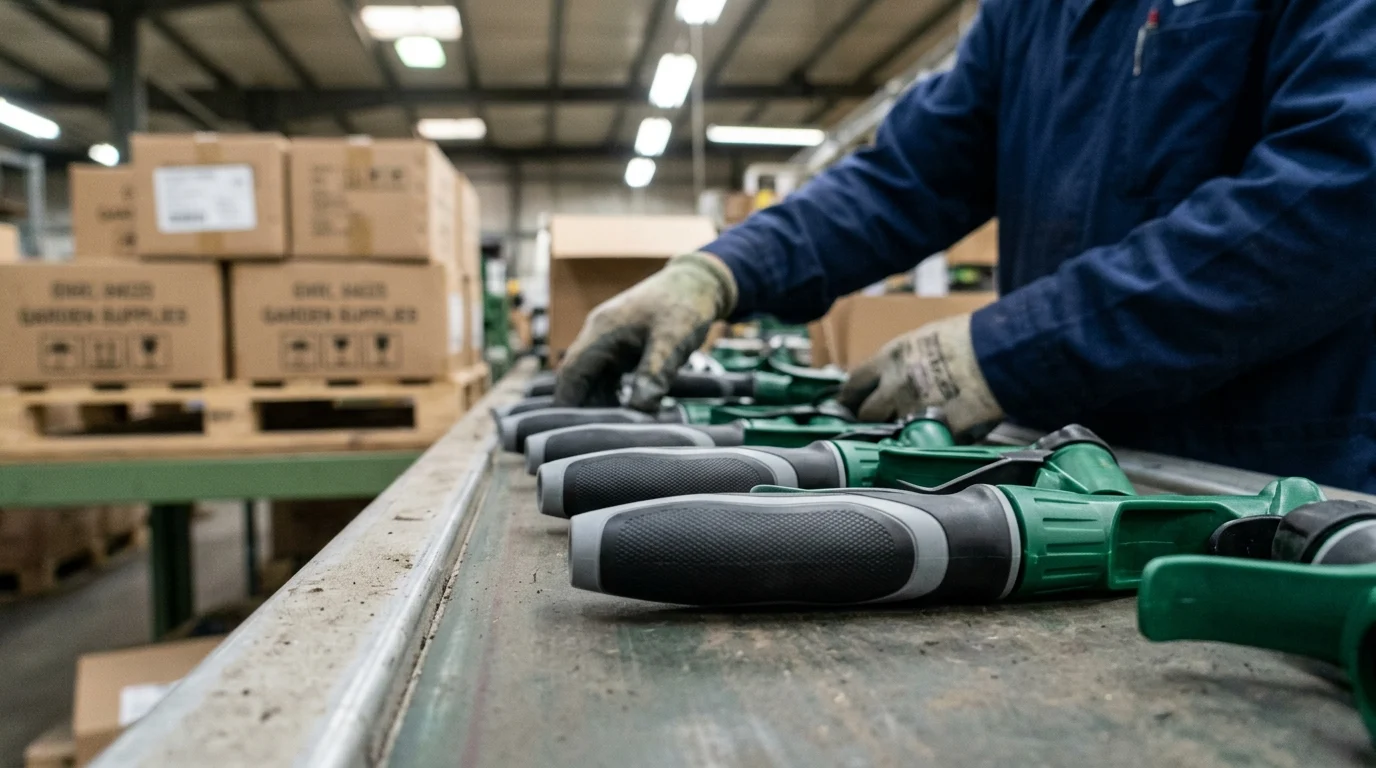
Developing an ergonomic TPR grip spray gun for garden use requires precise bio-mechanical engineering, going far beyond simply wrapping a plastic chassis in rubber. Our primary objective is to minimize the muscular effort required to actuate the trigger and sustain a hold on the device. This is particularly crucial for commercial landscapers or agricultural workers managing prolonged irrigation tasks.
A properly proportioned garden watering wand or spray gun can reduce overall hand fatigue by an estimated 30% during extended sessions requiring sustained grip forces of 10 to 15 lbf. Achieving this reduction relies heavily on optimizing the handle's physical geometry and material properties.
Handle Curvature and Palm Contact Area
The physical geometry of the handle dictates how grip pressure is distributed across the user's hand. Our industrial designers utilize 3D hand-mapping data to create a handle curvature that conforms to the natural resting position of the fingers and palm. Our standard ergonomic designs target a handle diameter of 32mm to 38mm to accommodate the largest percentile of adult users.
By maximizing the palm contact area—spreading the structural load over approximately 45 to 55 square centimeters—our design prevents localized pressure points. This contouring also ensures the trigger mechanism remains easily accessible without compromising the grip circumference, even when the user is wearing heavy protective gloves.
Surface Texture and Shore Hardness
The tactile response of the handle relies entirely on the specific formulation of the thermoplastic rubber. For optimal garden tool ergonomics, our engineers specify a target Shore A hardness rating between 55 and 65. If the durometer is too low (below 50 Shore A), the grip feels excessively spongy and is prone to rapid abrasion; if it exceeds 70 Shore A, the material loses its anti-slip characteristics in wet conditions.
Additionally, the surface is molded with engineered micro-textures, such as a diamond knurling pattern with a depth of 0.8mm to 1.2mm. This specific depth provides essential mechanical interlocking with gloves or bare skin while remaining shallow enough to allow mud and debris to easily wash away. However, users should note that TPR can be susceptible to degradation from certain harsh agricultural chemicals, making routine rinsing after use a recommended practice.
How Buyers Should Evaluate Low-Temperature Anti-Slip TPR Grips
For wholesale buyers, retail distributors, and procurement managers, sourcing a durable TPR grip spray gun for garden markets requires looking beyond superficial aesthetics. Because we invest heavily in our engineering process, we encourage buyers to evaluate the true quality of an anti-slip, low-temperature grip by examining the manufacturer's quality assurance protocols and molding precision.
Evaluating specific technical parameters and laboratory testing data ensures the product will survive multiple seasons of harsh outdoor use without degrading, cracking, or losing its ergonomic benefits.
Molding Controls to Prevent Aging and Peeling
The longevity of an overmolded grip depends heavily on the precision of the injection molding parameters. To prevent the TPR layer from peeling or aging prematurely, we utilize advanced bi-injection molding machines with precise thermal controls. The barrel temperature for the TPR phase is strictly maintained between 180°C and 210°C to ensure optimal flow and chemical adhesion to the ABS substrate.
Our facilities enforce rigorous quality control, targeting
Key Takeaways
- Use a dual-material design with a rigid ABS core and TPR overmold to balance pressure resistance, impact strength, comfort, and grip security.
- Specify an ABS wall thickness of about 2.5 mm to 3.0 mm to support durability under demanding garden use and high water pressure.
- Choose a TPR formulation that remains flexible below 0°C so users can maintain control even with cold hands or insulated gloves.
- Target wet slip resistance around 0.65 µ or higher for muddy and rain-exposed applications where hard plastic grips can become unsafe.
- Use two-shot injection molding to achieve strong ABS-to-TPR bonding, with peel strength targets above 50 N/mm to reduce delamination risk.
- Balance TPR softness, texture, ozone resistance, and cost early in development to avoid premature wear while preserving ergonomic performance.
Frequently Asked Questions
Why use TPR on a garden spray gun grip?
TPR provides a softer, higher-friction surface than bare ABS or hard plastic, helping users maintain control when the nozzle is wet, muddy, or used with gloves.
How does TPR perform in low temperatures?
Well-formulated TPR stays flexible in sub-zero conditions, including around -10°C, reducing stiffness and helping the grip remain comfortable and secure during cold-weather watering.
What is the role of the ABS core?
The ABS substrate gives the spray gun structural strength, impact resistance, and pressure stability, while the TPR overmold adds comfort and slip resistance.
Why is two-shot injection molding important?
Two-shot molding bonds the TPR layer directly to the ABS body, improving durability and helping prevent peeling or delamination during heavy use.
Can a TPR grip help when hands or gloves are muddy?
Yes. Textured TPR surfaces can maintain strong wet slip resistance, with internal benchmarks around 0.65 µ, making the tool easier to control in muddy garden conditions.