


Why Choose 15–18 Aluminum Nozzle Oscillating Sprinklers
Oscillating Sprinklers engineered with 15 to 18 aluminum nozzles are a common choice for delivering precise, rectangular irrigation patterns. Unlike rotary or impact alternatives, these units provide a gentle, rain-like curtain of water that prevents soil erosion while maintaining consistent soil moisture levels. Driven by a simple water-driven gear drive or piston mechanism, these sprinklers sweep back and forth without relying on complex electrical components. While a 15- to 18-nozzle configuration provides a solid baseline for water volume, nozzle count is essentially a proxy for tube length. Manufacturers typically specify coverage by rectangular dimensions (length × width) rather than nozzle count, which is not a standard consumer classification.
Key Features and Definitions
The core architecture of these irrigation devices centers on a curved aluminum spray tube housing precisely drilled or stamped nozzles. Aluminum is chosen for its high corrosion resistance and low susceptibility to calcium and magnesium scaling, which frequently clogs standard plastic variants over time. However, aluminum tubes often come at a higher cost and are more susceptible to denting or bending if mishandled. A typical aluminum tube operates efficiently at standard residential flow rates, generally requiring a moderate flow (often between 2 and 5 Gallons Per Minute, depending on the specific product line). Furthermore, these units integrate seamlessly with standard 3/4" GHT (Garden Hose Thread) connectors, ensuring universal compatibility across home garden hoses and preventing unwanted leaks at the connection point.
Benefits for Even Lawn Coverage
The primary advantage of deploying a 15-to-18 nozzle configuration is the uniformity of water distribution across rectangular areas. By spacing the aluminum nozzles at optimal intervals along the curved tube, manufacturers ensure a consistent precipitation rate that scales with the PSI and GPM of the local water supply. This nozzle density helps prevent the formation of dry zones at the perimeter and waterlogged patches near the sprinkler base. Consequently, the even coverage promotes deeper root growth and reduces overall water waste compared to less precise watering tools. However, users should always account for real-world variables like wind drift and evaporative losses on hot days, which can skew the spray pattern. Additionally, because these sprinklers project a strict rectangular footprint, they are generally inefficient for non-rectangular or highly irregular yard shapes without significant manual repositioning.
Matching Sprinklers to Yard Size and Shape
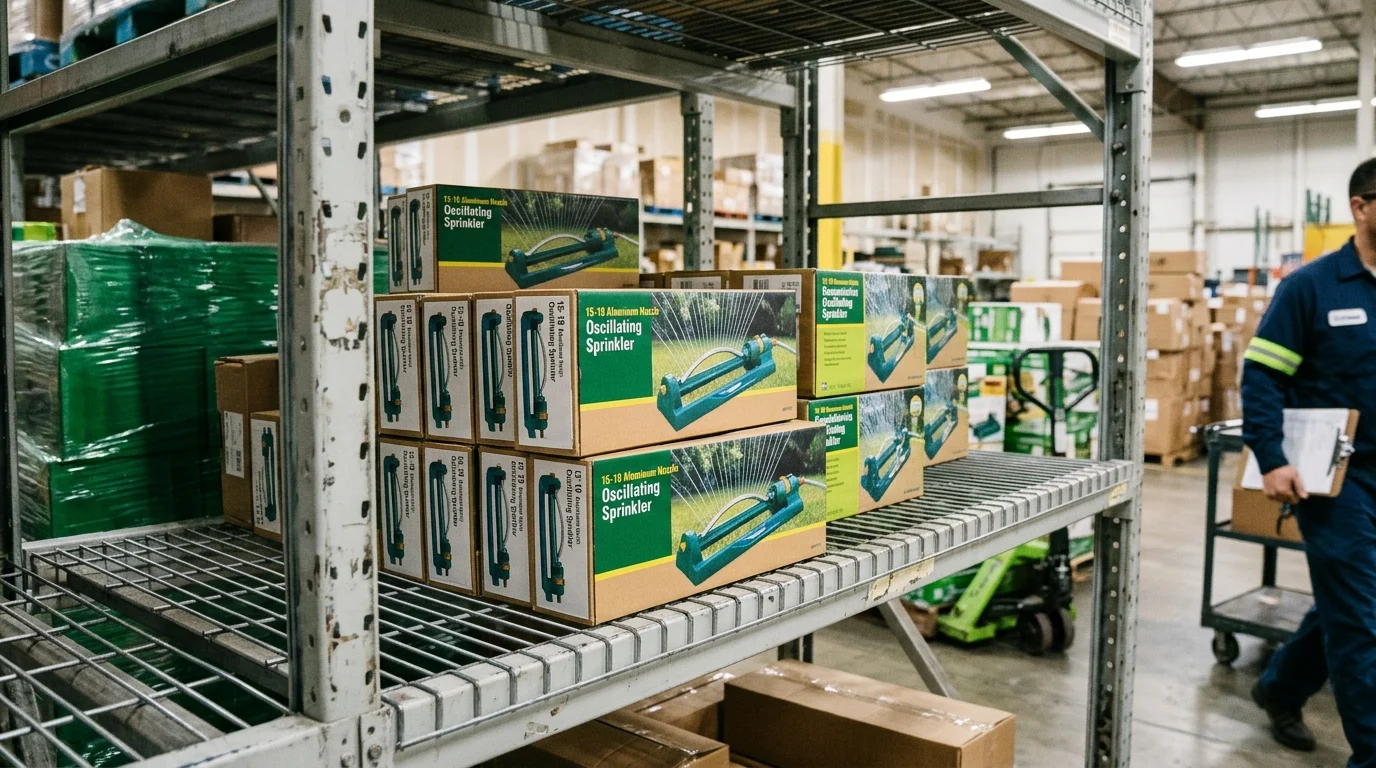
Selecting the correct oscillating sprinkler requires an analysis of the specific yard shape and the total square footage of the target zone. Because these devices inherently project a rectangular footprint, their efficiency peaks when aligned with the linear boundaries of typical residential landscapes. Properly matching the equipment to the specific site dimensions—often ranging from 1,500 to over 4,000 square feet—minimizes wasteful overspray onto hardscapes, thereby supporting water conservation efforts. It is important to note that covering expansive lawns evenly typically requires significant overlap between passes and multiple placements; presenting a single unit as capable of covering a massive area without repositioning is often unrealistic.
Small Yards vs. Large Lawns
When evaluating small yards versus large lawns, it is a common misconception that nozzle count alone dictates the coverage area. In reality, tube length, adjustable arc settings, and water pressure are the primary selection metrics that determine maximum coverage performance. A compact sprinkler—which often features around 15 nozzles due to its shorter tube—is highly effective for narrow spaces, limiting overspray onto adjacent driveways, sidewalks, or building foundations, and typically covers up to 2,000 square feet under optimal conditions and with proper placement. Conversely, a longer oscillating sprinkler, which naturally accommodates up to 18 nozzles, offers a wider spray distance and arc. This makes it a strong choice for expansive turf areas, capable of covering up to 4,000 square feet (often requiring repositioning for even saturation), provided the water pressure is sufficient.
| Sprinkler Configuration | Approximate Coverage Area | Key Coverage Factors | Recommended Application |
|---|---|---|---|
| 15-Nozzle Aluminum | Up to 2,000 sq ft (varies by pressure/arc) | Tube length, arc adjustment | Narrow side yards, urban gardens |
| 18-Nozzle Aluminum | Up to 4,000 sq ft (varies by pressure/arc) | Operating PSI, tube length | Wide residential lawns, property borders |
Adjustable Range and Spray Width
Modern oscillating sprinklers incorporate advanced cam-driven mechanisms and sliding flow-control tabs to modify both the range and width of the spray pattern. Users utilize these mechanical adjustments to tailor the oscillation arc, restricting the sweep to one side or narrowing the vertical spray angle to accommodate specific landscape features. For instance, adjusting the cam limiters can reduce the maximum throw distance down to a highly targeted zone. While this mechanical adaptability ensures that water is delivered precisely to the soil and mitigates runoff on sloped terrain, it is important to clarify that cam adjustments only trim the rectangular footprint to avoid hardscapes, rather than magically adapting the spray to fit irregular yard geometry.
How to Select the Right Oscillating Sprinkler
Choosing the right oscillating sprinkler goes beyond evaluating the spray tube material; it requires matching the hardware to the site's specific environmental conditions and water supply. Whether upgrading a residential irrigation system or outfitting a light-commercial property, buyers must navigate various practical specifications. It is essential to verify critical operational metrics—such as base stability, wind performance, and filtration—to ensure the chosen oscillating sprinkler performs as intended without requiring immediate replacement.
Measure Lawn Size and Water Pressure
Accurate measurement of both the physical lawn dimensions (in square footage) and the available water pressure is highly recommended prior to installation. Oscillating sprinklers require a minimum operating pressure—often cited generally around 30 PSI for many product lines—to activate the internal gear drive that powers the oscillation cycle. Standard residential water pressure is usually more than sufficient to achieve the maximum advertised coverage of a premium aluminum unit. If a home experiences severe municipal pressure drops, the sprinkler may experience stalled oscillation and pooling.
Key Takeaways
- Match the sprinkler’s rectangular coverage dimensions to the lawn zone rather than choosing by nozzle count alone.
- Use 15–18 aluminum nozzle oscillating sprinklers on rectangular turf areas where even, rain-like coverage can reduce runoff and dry spots.
- Expect large lawns of 1,500 to 4,000+ square feet to require multiple placements and overlapping passes for consistent irrigation.
- Check your available hose flow and pressure, because many models require moderate flow of about 2 to 5 GPM to perform as rated.
- Adjust spray length and width in small yards to prevent overspray onto patios, sidewalks, driveways, and fences.
- Account for wind drift, heat, and evaporation, as real-world conditions can shrink or distort the advertised coverage pattern.
Frequently Asked Questions
Are 15–18 nozzle oscillating sprinklers best for small yards?
They work well for small rectangular yards if the spray width and length can be adjusted to avoid sidewalks, fences, and patios. For compact turf, choose a model with range controls and use shorter watering runs to prevent pooling.
Can one oscillating sprinkler cover a large lawn?
Usually not evenly. Large lawns often need multiple placements with overlapping rectangular zones. Manufacturer coverage ratings are idealized, so real-world wind, pressure, and hose flow can reduce practical coverage.
Why choose aluminum nozzles instead of plastic nozzles?
Aluminum nozzles resist corrosion and mineral scaling better than many plastic designs, which helps maintain consistent spray patterns. The tradeoff is higher cost and a greater risk of dents or bending if the spray tube is mishandled.
What water pressure or flow does this sprinkler type need?
Many residential oscillating sprinklers perform best with moderate flow, often around 2 to 5 GPM depending on the model. Always compare the sprinkler’s rated coverage with your home’s available pressure and hose flow.
Do oscillating sprinklers work on irregular lawn shapes?
They are less efficient on curved or irregular turf because their spray pattern is rectangular. You may need shorter throws, partial-width settings, or manual repositioning to limit overspray and dry edges.