


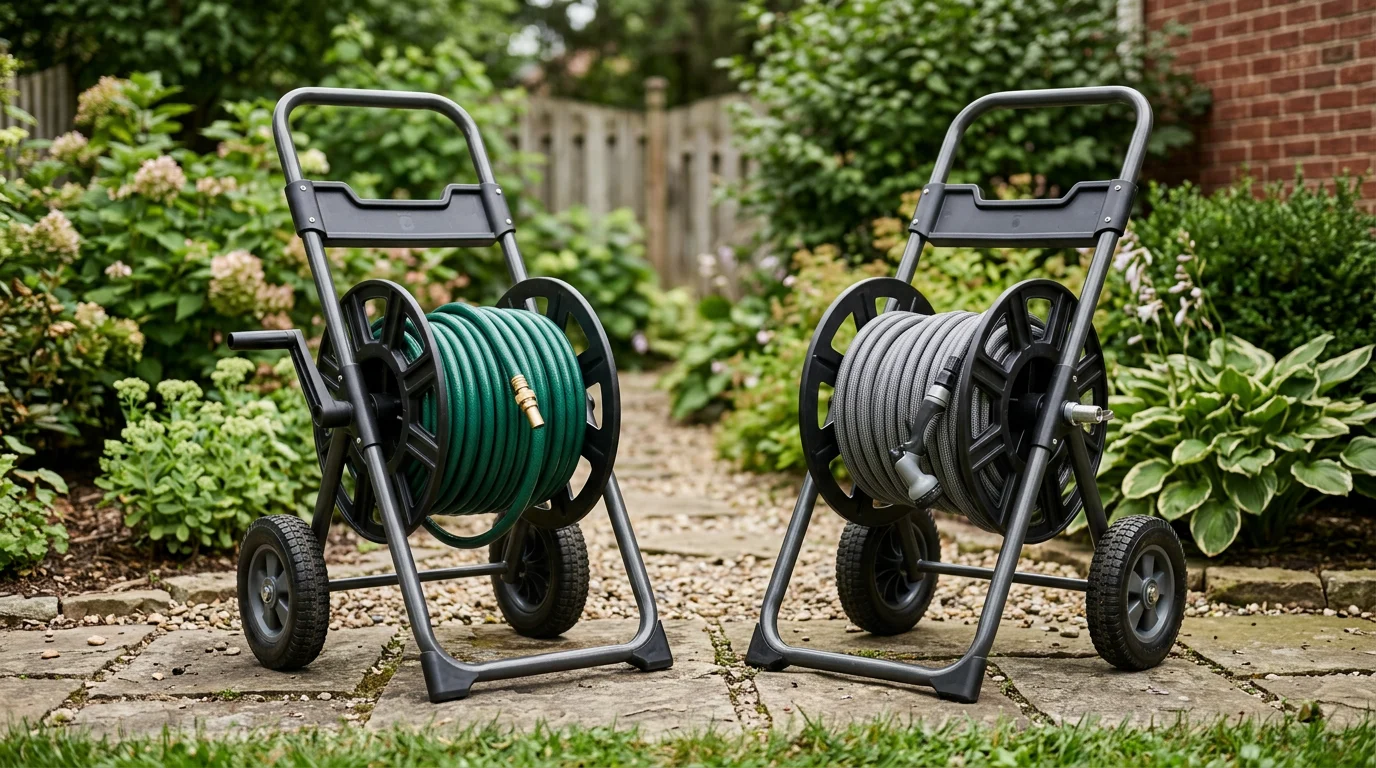
For garden retailers, the humble hose reel cart has become a test case in how convenience can reshape an entire category. Shoppers no longer want to spend an hour sorting screws, aligning frames, or troubleshooting leaks before watering the lawn. At the same time, retailers are under pressure to reduce bulky returns, protect margins, and improve online review scores. No-assembly hose reel carts address both sides of that equation: they arrive ready to use, reduce setup errors, and create a more premium customer experience. This article examines why pre-assembled units are gaining ground, how retailers should compare designs, and what supply chain and merchandising factors matter most.
Why No-Assembly Hose Reel Carts Are a Strategic Upgrade
The transition from traditional knock-down (KD) kits to no-assembly hose reel carts represents a significant shift in the garden tools market. For decades, retailers stocked unassembled units to minimize shipping volumes, passing the burden of assembly to the end-user. However, changing consumer expectations and the rising costs associated with product returns are forcing a reevaluation of this strategy.
Today, garden retailers increasingly prioritize pre-assembled units. These ready-to-use solutions eliminate the frustration of at-home assembly while offering a more premium out-of-the-box experience, fundamentally altering the merchandising landscape for watering equipment.
Reducing Consumer Friction
Consumer friction remains a major hurdle in the DIY garden equipment sector. Traditional hose reel carts require buyers to navigate complex instructions, align multiple structural components, and manually secure watertight seals. Industry data indicates that up to 25% of negative customer reviews for large garden watering equipment directly cite frustrating, time-consuming assembly processes.
By offering no-assembly hose reel carts, retailers instantly remove this barrier to satisfaction. Consumers can unpack the unit, connect it to a water source, and begin watering within minutes. This seamless experience drives higher initial satisfaction scores and encourages brand loyalty, as buyers increasingly associate the retailer with convenience and reliability.
Avoiding Missing Parts and Assembly Errors
Beyond frustration, self-assembly introduces a high risk of user error and component loss. Retailers frequently deal with returns caused by missing hardware, such as misplaced O-rings, screws, or crank handles. Hardware shortages and improper assembly account for nearly 15% of all product returns in the watering tools category.
Pre-assembled carts dramatically mitigate these logistical headaches. Because units are fully constructed and pressure-tested in a controlled factory environment, the likelihood of missing parts is virtually eliminated. Consequently, retailers stocking factory-assembled models often see defect and return rates plummet below 1.5%, preserving profit margins that would otherwise be lost to reverse logistics and liquidations.
How Retailers Should Compare No-Assembly Hose Reel Cart Designs

As the market for ready-to-use watering solutions expands, retailers must carefully evaluate the distinct designs available to their consumer base. Not all pre-assembled carts offer the same utility; selecting the right inventory requires a deep understanding of local market preferences, yard sizes, and ergonomic requirements.
Benchmarking specific models and their performance metrics ensures buyers stock products that meet both residential and commercial-grade expectations.
Comparing Xinfeng Model 7020 and Model 7010
When analyzing top-tier options, the Xinfeng Model 7020 and Model 7010 highlight the diverse applications of no-assembly designs. The Model 7020 features an enclosed, cabinet-style architecture equipped with an auto-guide rewinding mechanism, making it ideal for patios and smaller urban gardens. Conversely, the Model 7010 utilizes a robust open-reel design intended for heavy-duty, long-range watering tasks.
| Feature / Specification | Xinfeng Model 7020 | Xinfeng Model 7010 |
|---|---|---|
| Design Type | Enclosed Cabinet / Auto-Guide | Open Reel / Manual Crank |
| Hose Capacity | 20 meters (1/2" hose) | Up to 45 meters (1/2" hose) |
| Target Application | Urban gardens, patios, compact spaces | Large lawns, agricultural margins |
| Assembly Status | 100% Pre-Assembled | 100% Pre-Assembled |
| Mobility | Lightweight integrated handle | Heavy-duty wheels and tow handle |
Retailers catering to suburban homeowners with expansive lawns will find the 45-meter capacity of the 7010 indispensable, whereas boutique garden centers may favor the sleek, space-saving profile of the 7020.
Evaluating Key Design and Performance Factors
Beyond structural aesthetics, evaluating internal components is critical for long-term durability. Retailers should prioritize carts constructed with UV-resistant polypropylene or ABS plastics to prevent housing degradation under harsh summer sunlight. Internal water pathways must also withstand significant hydraulic stress; high-quality pre-assembled units are typically rated for an operating pressure of 8 to 10 bar, with a burst pressure limit exceeding 24 bar.
Connection standardization is another vital performance factor. For the North American market, seamless integration with standard 3/4" GHT (Garden Hose Thread) connectors is non-negotiable. Factory-installed, leak-proof GHT brass or high-grade polymer fittings ensure the cart interfaces perfectly with existing residential plumbing, further reinforcing the plug-and-play appeal of the no-assembly design.
Commercial Value of No-Assembly Hose Reel Carts
The shift toward pre-assembled hose reel carts is not merely a customer service initiative; it is a calculated commercial maneuver. Procurement teams often weigh the perceived increase in freight costs against the tangible savings found in reduced return rates and higher retail price premiums.
By understanding the modern packaging innovations and supplier capabilities associated with these products, retailers can optimize their supply chains and maximize category profitability.
Improving Packaging Efficiency and Reducing CBM
Historically, the primary argument against pre-assembled garden carts was the inefficiency of shipping empty space, leading to a high CBM (Cubic Meter) per unit. However, modern engineering has largely neutralized this concern. Manufacturers now utilize advanced nesting techniques, collapsible tow handles, and modular wheel tucks that drastically shrink the retail footprint without requiring the end-user to perform actual assembly.
These space-saving innovations allow a fully functioning no-assembly cart to achieve a packaging volume of just 0.045 CBM per unit. As a result, logistics teams can load over 1,500 units into a standard 40HQ shipping container. This high-density packing keeps per-unit freight costs low, ensuring the transition to pre-assembled inventory does not erode wholesale margins.
Buyer Criteria Before Switching Suppliers
Before transitioning to a new supplier for no-assembly models, retail buyers must establish strict procurement criteria. Key indicators of a reliable manufacturing partner include rigorous factory-level quality control, such as automated pressure testing on 100% of outgoing units. Buyers should also seek suppliers offering flexible Minimum Order Quantities (MOQs)—typically around 500 units per SKU—to allow for initial market testing without massive capital commitment.
Lead times are equally critical; a dependable supplier should guarantee production cycles of 30 to 45 days to ensure consistent inventory replenishment during peak seasonal demand.
Key Takeaways
- Retailers should prioritize no-assembly hose reel carts for SKUs with high assembly-related complaints, since up to 25% of negative reviews in large watering equipment cite setup frustration.
- Factory-assembled and pressure-tested carts can reduce missing-part and assembly-error returns, which account for nearly 15% of watering tool returns.
- Although pre-assembled carts increase carton size and freight volume, retailers can protect margin by lowering reverse logistics, refurbishing, and markdown costs.
- Stocking both compact and heavy-duty designs helps retailers serve different users, with the Xinfeng 7020 fitting patios and the 7010 supporting up to 45 meters of hose for larger spaces.
- In-store demonstrations and e-commerce videos should highlight ready-to-use setup, leak-tested fittings, stable mobility, and smooth rewinding to justify premium pricing.
Frequently Asked Questions
1. Why are retailers moving from KD hose reel kits to pre-assembled carts?
Retailers are switching because pre-assembled carts reduce customer frustration, missing-part complaints, assembly errors, and costly returns while improving the out-of-box experience.
2. Do no-assembly hose reel carts cost more to ship?
Yes, they usually require larger cartons and more storage space, but lower return rates and fewer service issues can offset the higher freight cost.
3. How do pre-assembled carts reduce product returns?
Factory assembly eliminates common problems such as lost screws, misplaced O-rings, incorrect fittings, and user-caused leaks, helping defect and return rates fall significantly.
4. Which model is better for small gardens or patios?
The Xinfeng Model 7020 is better suited for patios, small gardens, and balcony-adjacent spaces because it has an enclosed cabinet design and auto-guide rewinding.
5. Which hose reel cart is better for large lawns or commercial use?
The Xinfeng Model 7010 is designed for heavier-duty use, offering an open-reel structure, manual crank, and hose capacity of up to 45 meters.