


A single hard freeze can turn a small amount of trapped water into a costly product failure. For garden watering equipment, the risk is especially high in spray guns, Quick Connectors, hose timers, and valve assemblies where residual water hides inside narrow chambers. Because freezing water expands by roughly9%, even well-made components can split, leak, or lose seal integrity if customers store them wet. For distributors, winter is not only a maintenance issue; it is a warranty, education, and merchandising opportunity. This article explains how frost damages watering tools, which components are most exposed, and how distributors can help customers prevent avoidable failures before temperatures fall below 0°C or 32°F.
Why Winter Frost Damages Garden Watering Equipment
The fundamental physics of freezing water present a severe threat to garden watering equipment during the winter months, particularly in regions with severe frost, such as lower USDA hardiness zones. When ambient temperatures drop below 0°C (32°F), residual water left inside hoses, nozzles, and fittings begins to crystallize. As water transitions into solid ice, its volume expands by approximately 9%. This phase change occurs with immense volumetric force, capable of exerting extreme internal pressure against the walls of enclosed spaces.
For distributors and retailers, this seasonal phenomenon translates directly into a spike in warranty claims and customer complaints every spring. Because many manufacturer warranties explicitly exclude frost damage, understanding how this structural damage occurs allows industry professionals to better educate end-users, manage liability conversations, and source more resilient product lines.
How Trapped Water Cracks Spray Guns and Quick Connectors
Spray guns and quick connectors are highly susceptible to frost damage due to their complex internal geometries. A standard multi-pattern spray gun contains tight internal chambers, flow dials, and a central valve core. When trapped water freezes within these spaces, the resulting pressure forces internal seams apart or creates micro-fractures in the main plastic barrel.
Quick connectors experience similar failures, particularly those featuring an internal "aqua stop" or check valve. These components utilize an internal spring-loaded mechanism that holds a small reservoir of water even after the hose is disconnected. If exposed to freezing temperatures, the ice distorts the internal spring, unseats the retaining O-ring, and cracks the outer collar, rendering the connector useless once it thaws.
Which Components Face the Highest Freeze Risk
While all watering tools are vulnerable, specific components face a disproportionately high risk of freeze-induced failure. Industry data suggests that a majority of winter-related defect claims stem from undrained Spray Nozzles and stop-valve connectors. Plastic components manufactured with thin walls are typically the first to split under internal pressure.
Additionally, internal rubber components such as standard O-rings and flat washers can lose their elasticity in freezing conditions. While the rubber itself does not crack from internal water expansion, prolonged exposure to sub-zero temperatures causes the material to shrink and harden. When the system is pressurized again in the spring, these compromised seals fail to sit flush, resulting in persistent leaks around the 3/4-inch thread junctions.
How Distributors Should Teach Winter Maintenance
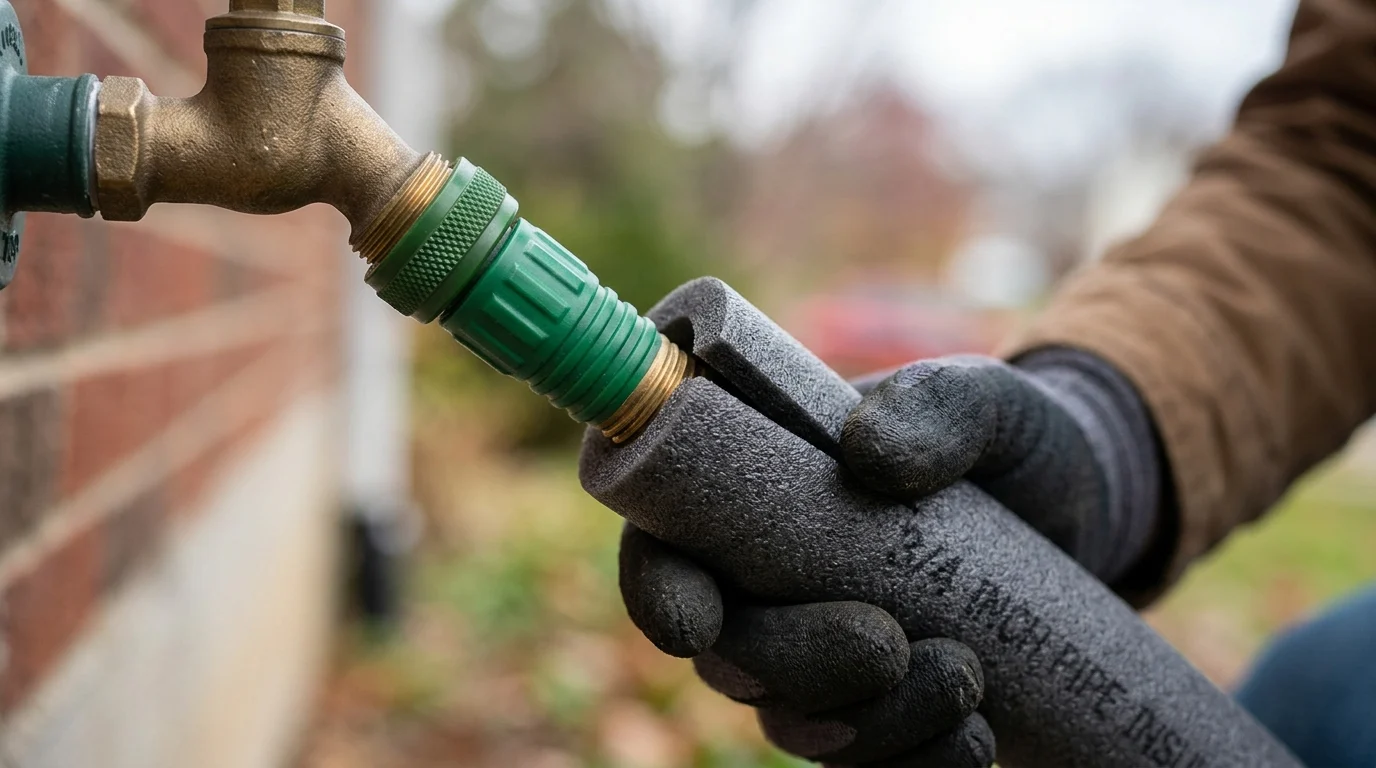
Proactive winter maintenance is the most effective strategy for preserving the integrity of garden watering equipment. Distributors play a vital role in disseminating this information, as proper winterization can significantly extend the operational lifecycle of consumer watering tools.
By providing clear, actionable drainage and storage instructions—and training retail staff to navigate frost-damage warranty conversations—brands can minimize unwarranted defect claims and improve overall customer satisfaction. Distributors can also merchandise frost-protection products and storage solutions seasonally to drive additional business value.
Step-by-Step Drainage for Valves and Connectors
The first phase of winterization requires the complete evacuation of residual water from all valves, timers, and connectors. End-users should begin by disconnecting all fittings from the main outdoor spigot. For spray guns and wands, the trigger must be fully depressed and held open for several seconds while vigorously shaking the device to clear the internal valve core.
For advanced setups involving mechanical water timers or multi-way manifolds, gravity drainage alone is often insufficient. Distributors should advise users to manually open all valve ports and gently shake the unit to dislodge droplets. In commercial or heavy-duty residential applications, utilizing an air compressor set to a moderate pressure can effectively blow out trapped moisture without damaging the internal diaphragms or delicate gear trains.
How to Store Hose Reels, Hose Carts, and 3/4-Inch
Hoses
Proper storage of bulkier equipment, such as hose reels and heavy-duty hoses, requires specific handling to prevent structural stress. Hose carts must be entirely drained by unspooling the hose and tilting the cart to empty the internal manifold; failure to do so can cause the central rotary drum to rupture, which represents a high-cost replacement part.
Standard 3/4-inch garden hoses should be completely unwound on a slope to allow gravity to pull water out. Once drained, the hose must be loosely coiled—avoiding tight kinks that can become permanent deformities in cold weather—and stored in a climate-controlled environment. Maintaining a storage temperature above freezing ensures that the polymer or rubber blends retain their pliability, preventing the outer jacket from cracking when uncoiled the following spring.
Cold-Resistant Specifications for Garden Watering Equipment
For markets that experience harsh winters, educating customers on maintenance is only half the equation; distributors must also prioritize sourcing garden watering equipment engineered with cold-resistant specifications. The material composition of a connector or spray gun dictates its thermal tolerance and overall durability.
Selecting SKUs based on precise polymer formulations and high-grade seal materials ensures that products can withstand accidental freezing and severe temperature fluctuations without suffering critical structural failure. This allows distributors to implement premium pricing strategies for cold-resistant SKUs, positioning them as long-term investments for the end-user.
POM vs ABS Fittings in Cold Conditions
The choice of injection-molded plastics heavily influences a product's winter survival rate. Acrylonitrile Butadiene Styrene (ABS) is an industry standard due to its cost-effectiveness and high impact resistance at room temperature. However, ABS becomes highly brittle in cold conditions, with its impact strength dropping significantly at temperatures below -5°C (23°F).
Conversely, Polyoxymethylene (POM), also known as acetal, offers vastly superior cold-weather performance. POM maintains its high tensile strength, fatigue resistance, and dimensional stability down to -40°C (-40°F).
| Material | Minimum Operating Temp | Cold Weather Brittleness | Relative Cost Tier |
|---|---|---|---|
| ABS Plastic | -5°C (23°F) | High (Prone to cracking) | Low |
| POM (Acetal) | -40°C (-40°F) | Low (Retains flexibility) | Medium |
| Brass (Solid) | -40°C (-40°F) | Low (Conducts cold but retains strength) | High |
Distributors servicing colder climates should strongly favor POM-based quick connectors and internal valve cores
Key Takeaways
- Advise customers that water expands by approximately 9% when it freezes, creating enough pressure to crack hoses, spray guns, connectors, and valve housings.
- Prioritize winter education around spray nozzles, multi-pattern spray guns, quick connectors, stop-valve fittings, hose timers, O-rings, and washers because these parts commonly retain residual water.
- Train retail and distributor teams to explain that many warranties exclude frost damage, helping reduce spring claim disputes and customer frustration.
- Recommend that customers disconnect, drain, open, and store watering equipment indoors before temperatures drop below 0°C or 32°F.
- Merchandise frost-protection products, replacement washers, connectors, and storage solutions before winter to support preventive maintenance and seasonal sales.
Frequently Asked Questions
1.Why does frost damage garden watering equipment?
When temperatures fall below 0°C or 32°F, trapped water freezes and expands by about 9%. That expansion creates internal pressure that can crack plastic housings, split seams, distort valves, and damage fittings.
2. Which watering components are most likely to fail in winter?
Spray guns, nozzles, quick connectors, stop-valve fittings, hose timers, O-rings, and washers face the highest risk because they often retain small amounts of water in internal chambers, valves, or seals.
3. Why are quick connectors especially vulnerable to freezing?
Quick connectors with aqua-stop or check-valve mechanisms can trap water around springs and O-rings. When that water freezes, it may distort the spring, unseat seals, or crack the outer collar.
4. Do warranties usually cover frost damage?
Many manufacturer warranties exclude frost damage because it results from storage or maintenance conditions rather than a manufacturing defect. Distributors should communicate this clearly before winter begins.
How should customers prepare watering tools for winter?
Customers should disconnect all hoses, open valves and spray triggers, drain connectors and timers completely, remove washers if needed, and store components indoors in a dry, frost-free location.